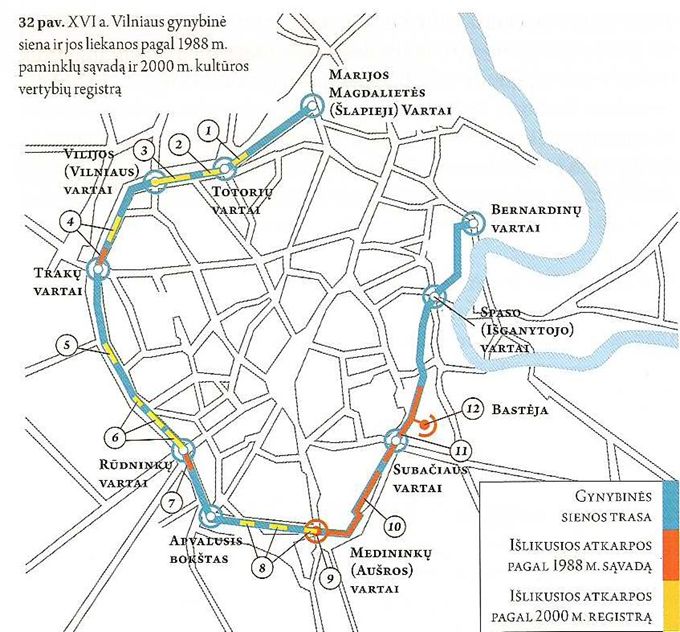
The diagram shows the entire route of the defensive wall, with the locations of the gates marked. The St Mary Magdalene Gate has not survived, and there are no paintings depicting it; only the approximate location of the gate is known.
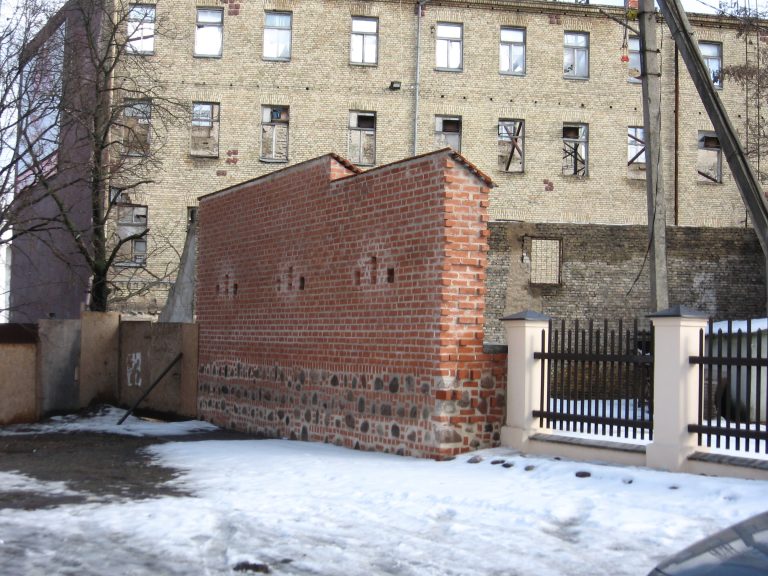
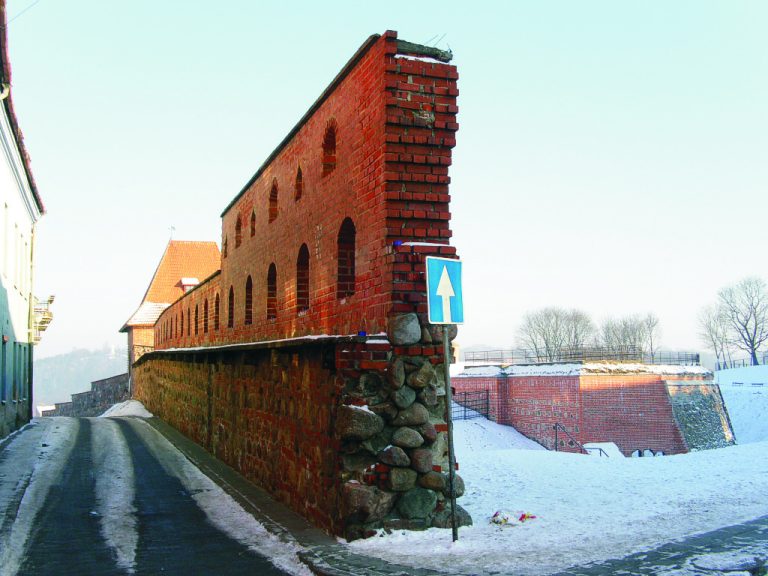
2. Section of the Wall on S. Gucevičiaus Street
This small section of the lost defensive wall was reconstructed in 2006. The Tatars’ Gate stood at the intersection of Totorių Street and Benediktinių Street.
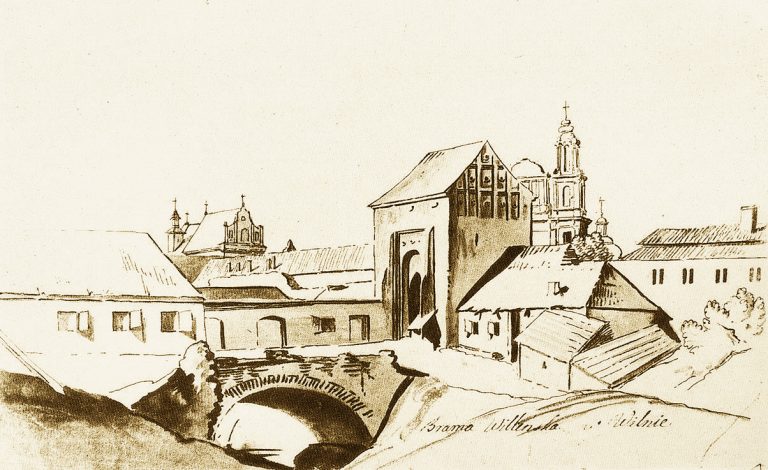
3. Vilija (Vilnius) Gate
The lost Vilija (Vilnius) Gate stood at the intersection of Vilnius and Benediktinių Streets. From the outside, the gate was protected by the Kačergos (Vingriai) stream and a defensive moat. The stream was channelled and filled in at the end of the 19th century.
P. Smuglevičius’s drawing depicts the gate with a masonry bridge that once stood beside it. The entrance opening was decorated with a rectangular niche with a semicircular arch, above which there was a slot for lowering the iron gate. The side gables were decorated with rows of rectangular niches containing loopholes.
The gate was adorned with an image of the Blessed Virgin Mary.
4. Trakai Street Gate
The gate stood at the beginning of Trakai Street. Its Renaissance architecture was similar to that of the Church of St Stephen. There were few loopholes, and the roof was decorated with weathervanes. The gate was also adorned with an image of the Blessed Virgin Mary on the city side.
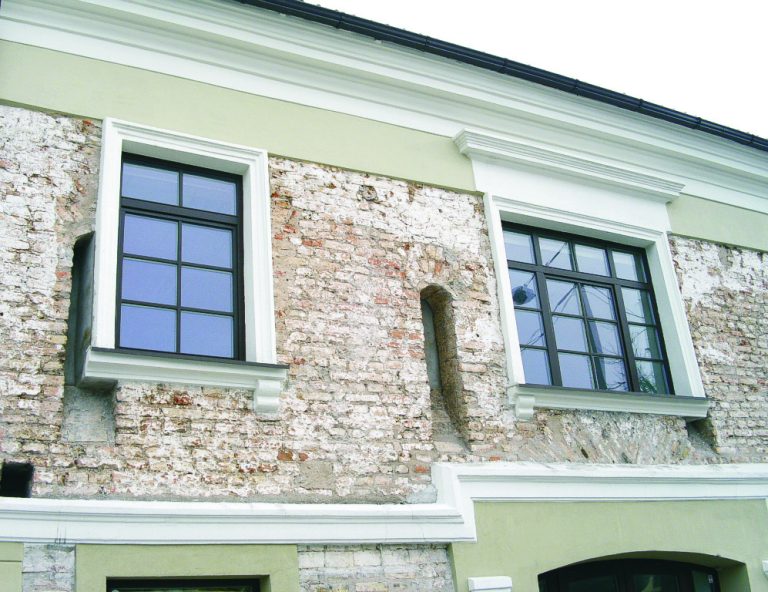
5. Section of the Wall at Pylimo St. 30
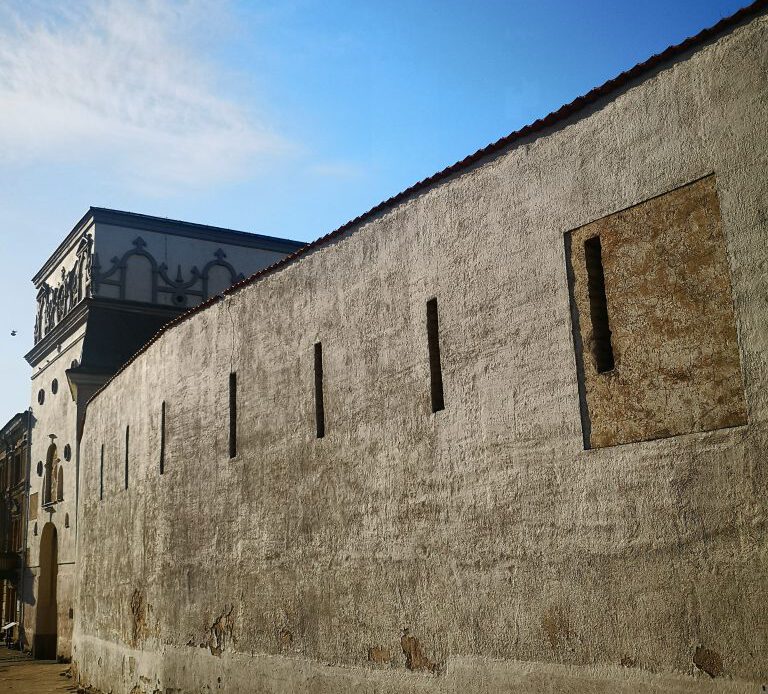
Fragments of the surviving defensive wall with elongated loopholes can be seen in the façade of the building. Where residential buildings were later built against the wall, sections of it have survived either inside or outside the buildings.
Further fragments of the wall can be found in the courtyard at Trakai St. 2 and in the courtyard at Rūdninkų St. 13.
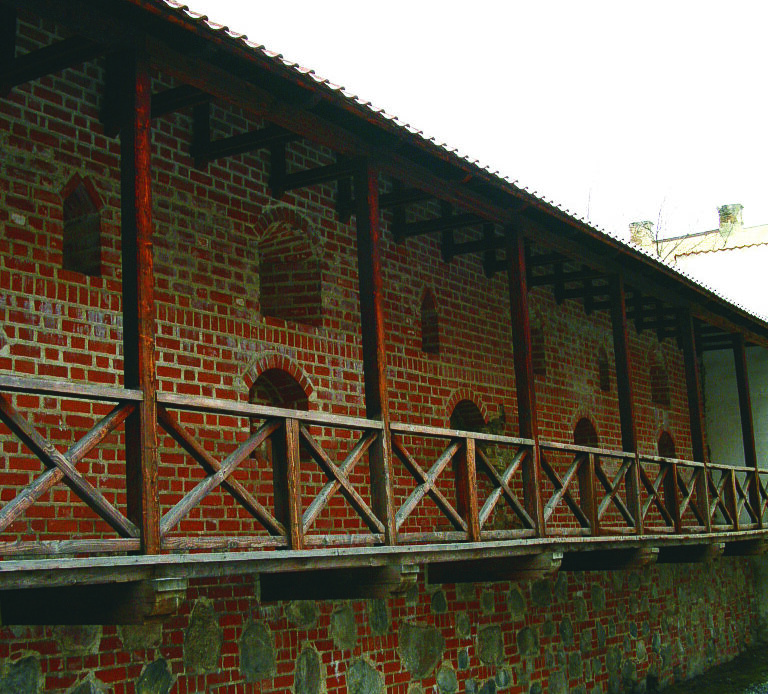
6. Section of the Wall in the Courtyard at Rūdninkų St. 13
A restored section of the defensive wall with wooden galleries can be seen in the courtyard at Rūdninkų St. 13. Further fragments of the wall can be seen in the courtyard at Trakai St. 2 and on the façade of the building at Pylimo St. 30.
Audio player
7. Rūdninkų Gate
The Rūdninkų Gate stood at the beginning of Rūdninkų St. It was a powerful defensive structure consisting of two parts: the outer gate and the main gate. The outer gate was a strongly projecting section with loopholes on its sides. The second part of the gate was twice as high, cube-shaped, and also had loopholes, with a large window at the front.
In the 17th and 18th centuries, noble guests – kings, voivodes and bishops – entered the city through the Rūdninkų Gate. The gate was specially decorated for their arrival, and the guests were welcomed with ceremonies.
8. Section of the Wall at Pylimo St. 48
A relatively well-preserved section of the wall, which can be viewed both from the outside and from the courtyard side (there is a café in the courtyard).
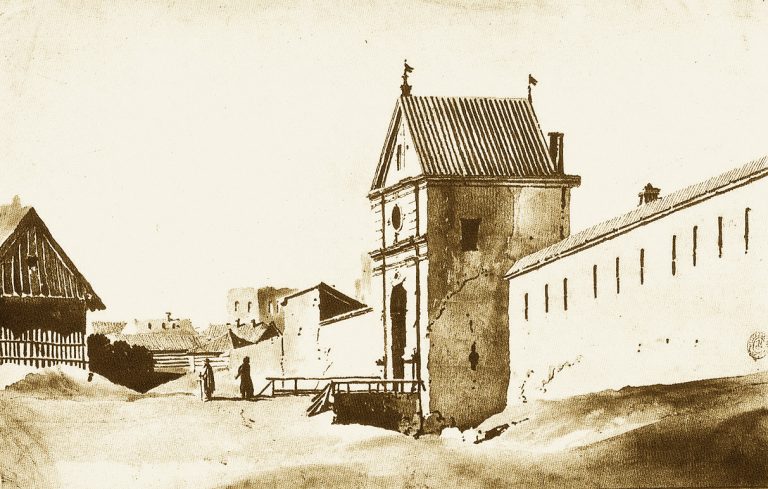
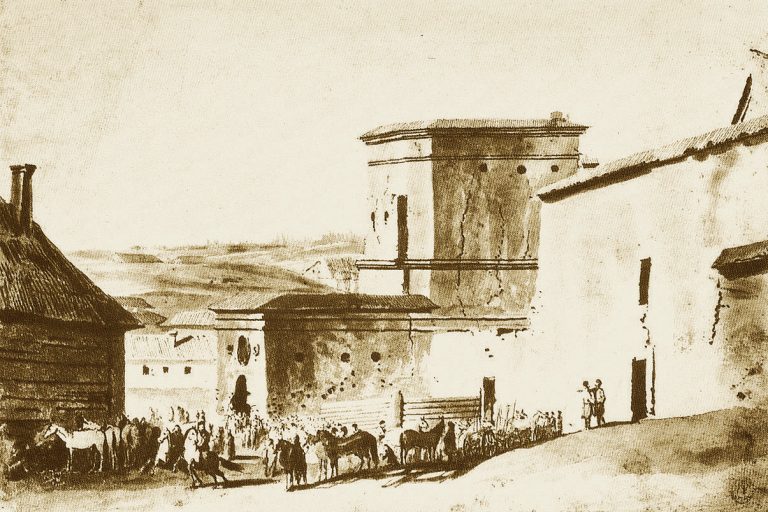
9. Rūdninkų (Round) Tower
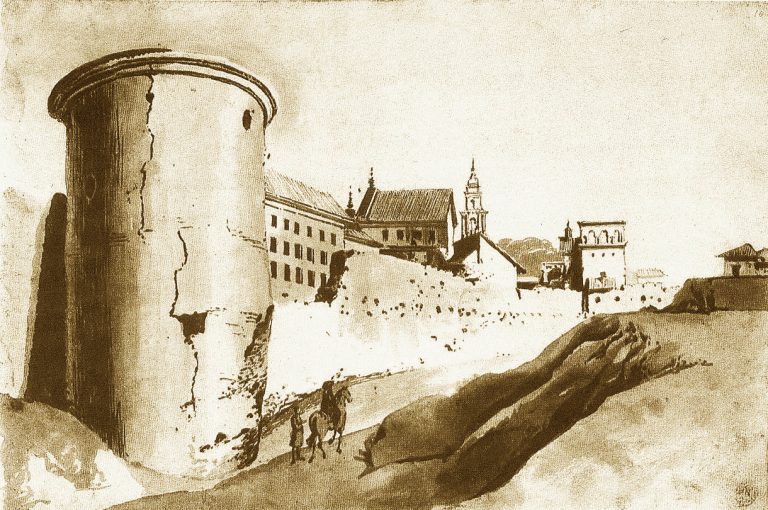
The Round Tower stood at the intersection of Bazilijonų and Arklių Streets, opposite the Market Hall; today, the site is an undeveloped public square. In P. Smuglevičius’s drawing, the tower’s walls are cracked and the plaster has fallen away. A surviving section of the wall along Bazilijonų St. can also be seen. Behind the wall are the Basilian Monastery, the Church of St Teresa with its bell tower, and the Gate of Dawn.
10. Gate of Dawn (Medininkai Gate)
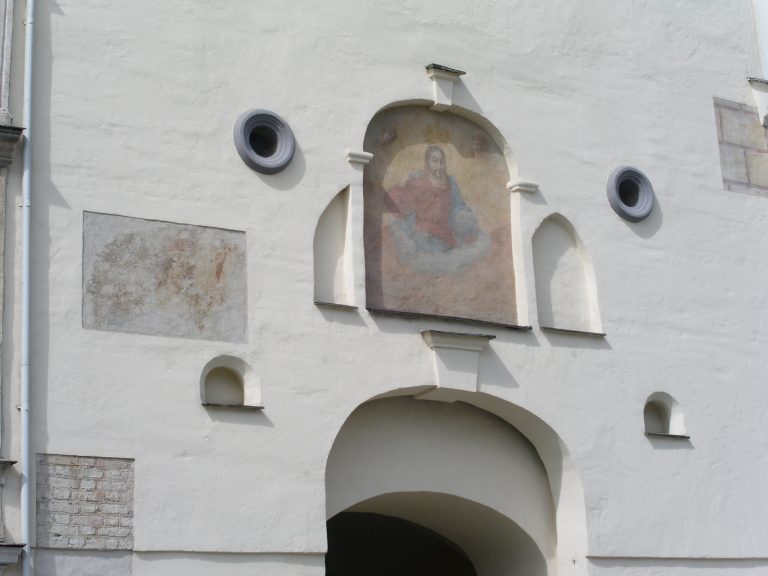
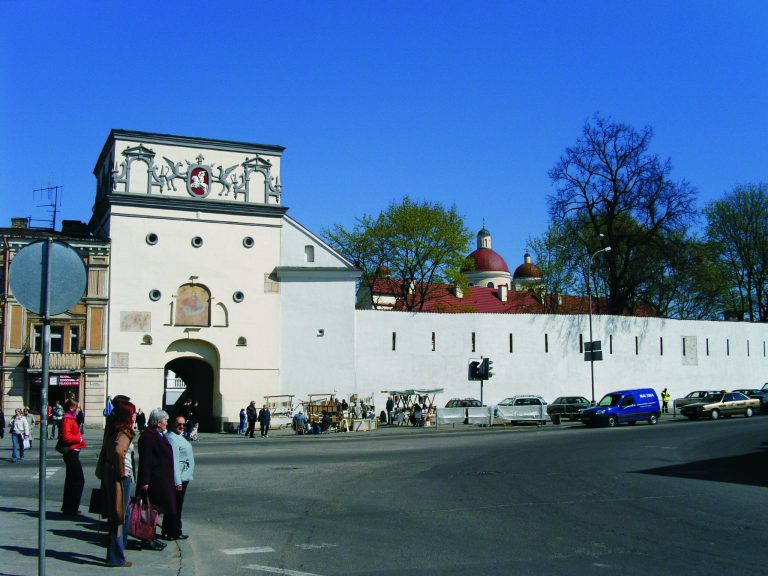
The Renaissance Gate of Dawn survived destruction because it housed the miraculous image of the Mother of God. It is a massive, rectangular structure with five loopholes on its outer façade. The entrance arch had double gates. The upper part of the building (the attic) is decorated with the Vytis coat of arms, held by griffins (mythological creatures with eagle heads and wings and lion bodies). In a niche in the gate’s façade is the restored 17th-century fresco The Saviour of the World.
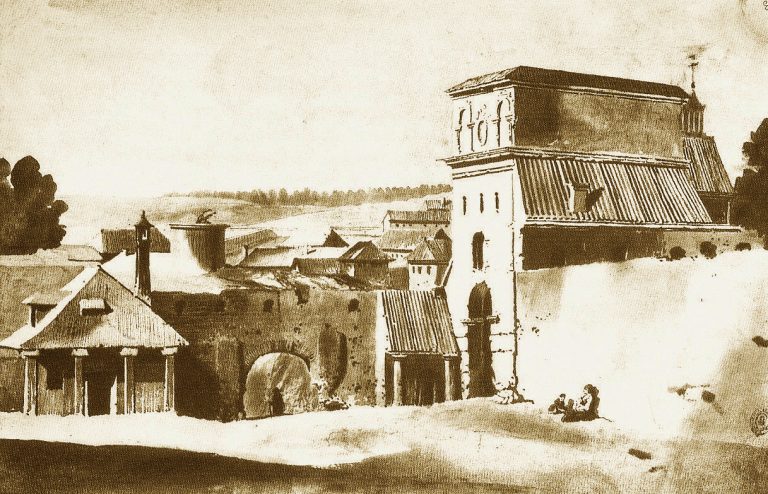
P. Smuglevičius’s drawing shows a wall that ran perpendicular to the defensive wall. It is a passage-gallery with an entrance opening on the ground floor. At the end of the wall (on the left) stands a tower with a water reservoir. The springs of the Gate of Dawn originated here.
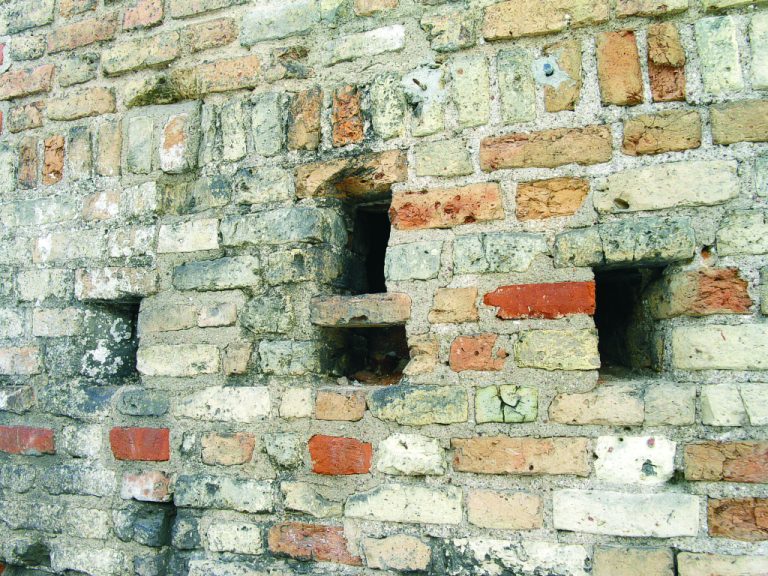
11. Section of the Wall at Bazilijonų St. 12
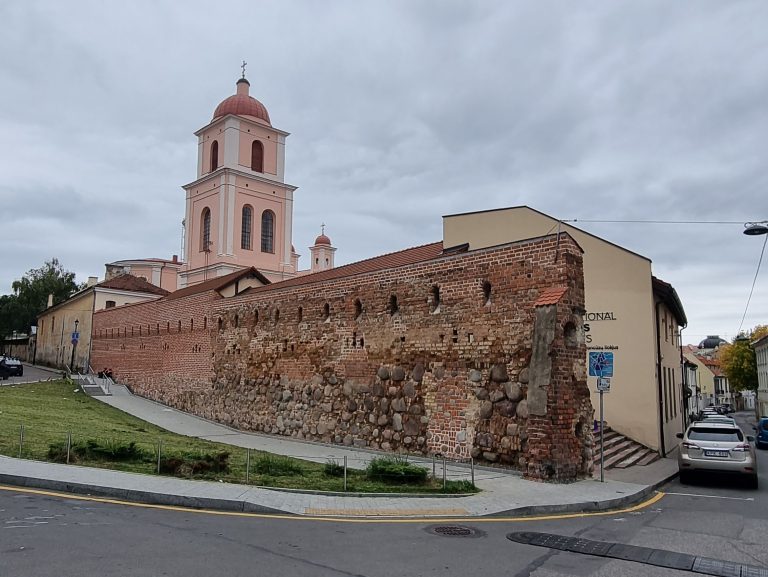
A section of the wall with loopholes has survived to the east of the Gate of Dawn.
12. Section of the Wall on Šv. Dvasios St.
This section of the wall was restored in 2016, and Šv. Dvasios St., which runs alongside the wall, was also renovated.
13. Subačius Gate
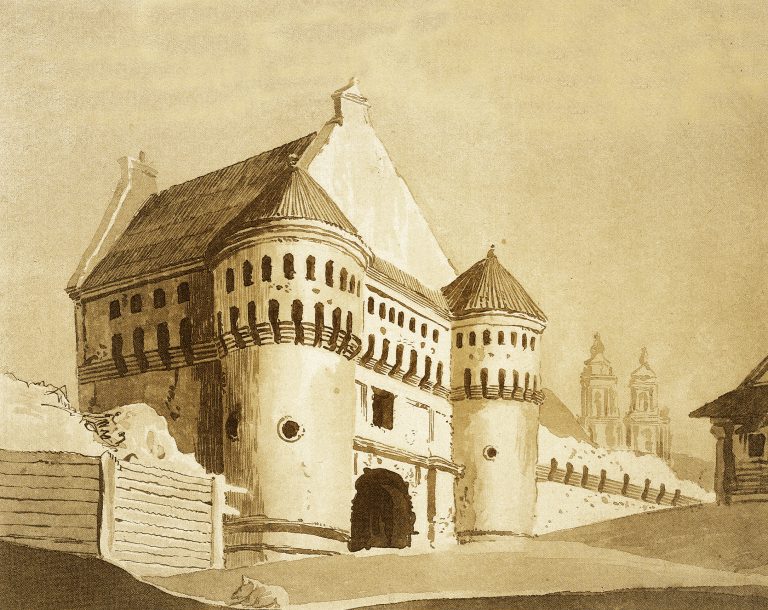
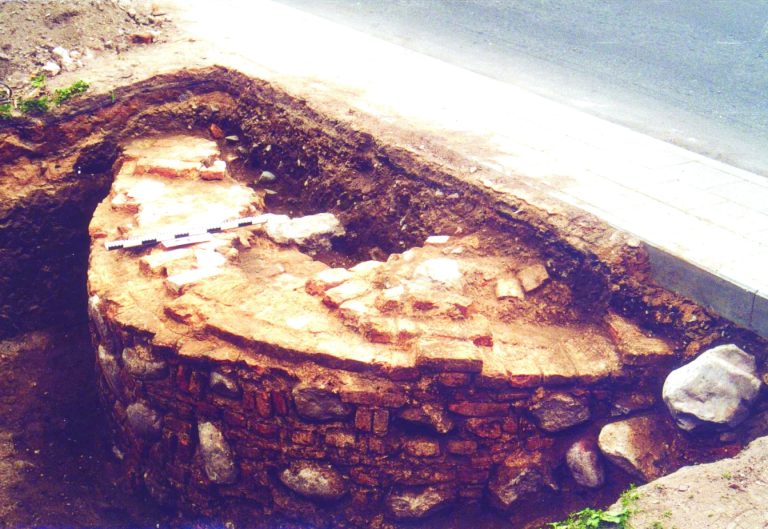
The Subačius Gate stood at the intersection of Subačiaus and Bokšto Streets, and its appearance can be seen in P. Smuglevičius’s drawing. It was a massive defensive structure with two corner towers, two rows of loopholes, and a passage arch. The foundations of the towers were discovered during archaeological research.
14. Bastion (Artillery Bastion)
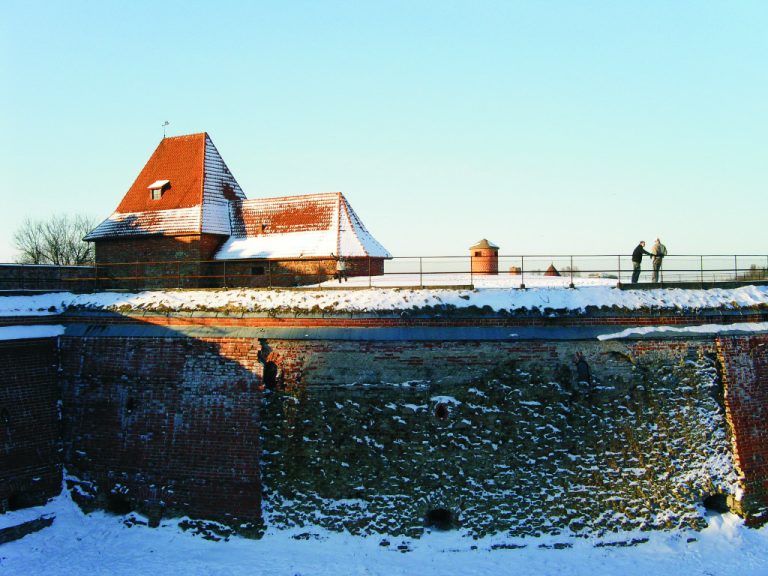
The bastion was built as an additional defensive structure a century later than the defensive wall itself. In the 18th century, it was abandoned and turned into a city rubbish dump. During both World Wars, the Germans used the underground chambers as a shelter and weapons depot. Until 1965, the building housed vegetable storage facilities; it was later restored and adapted for use as a museum.
15. Section of the Wall at Bokšto St. 20
This section of the wall next to Bokšto St. was reconstructed in the 1970s.
16. Saviour Gate
No depiction of the gate, which stood at the intersection of Maironio and Užupio Streets, has survived.
17. Bernardine Gate
The defensive wall continued towards the Bernardine Church, next to which stood the Bernardine Gate.