1. Adomas Mickevičius Museum, 11 Bernardinų St.
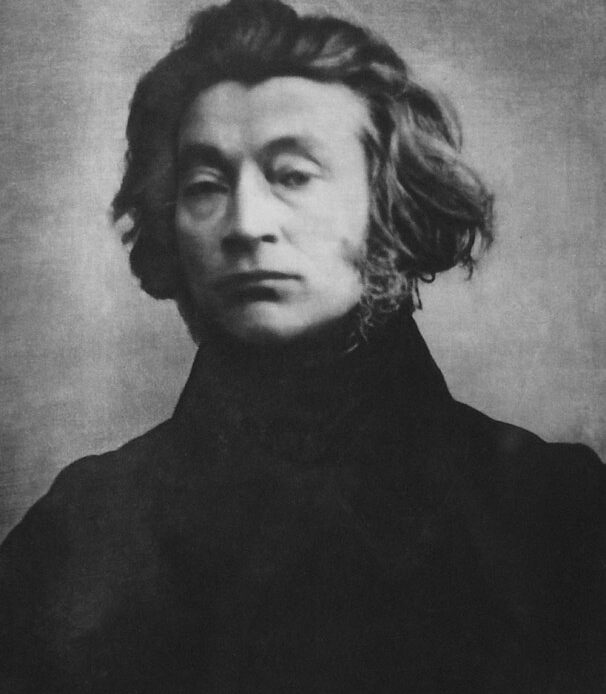
Adam Mickiewicz (1798–1855). The Adam Mickiewicz Museum is located in his former apartment at 11 Bernardinų St. Mickiewicz was a Polish Romantic poet who connected Polish, Lithuanian and Belarusian cultures.
Born in the vicinity of Navahrudak, he studied at Vilnius University from 1815 to 1819 and was involved in the secret Philomaths and Philarets societies. In Vilnius, Mickiewicz published a book of poetry and the poems Forefathers’ Eve and Grażyna.
In 1823, he was arrested by the Tsarist authorities and exiled to Russia a year later. Later, from 1832 onwards, he lived in Paris, where he wrote the epic poem Pan Tadeusz.
2. Laurynas Gucevičius, Monument, 1B S. Daukanto St.
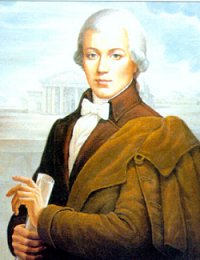
Laurynas Gucevičius (1753–1798). In front of you is a monument dedicated to Gucevičius, the most prominent Neoclassical architect of Vilnius (erected in 1984, sculptor V. Vildžiūnas).
Gucevičius designed Vilnius Cathedral and the Town Hall, as well as some of the buildings of Verkiai Palace. Born in the vicinity of Kupiškis, he later studied architecture at the Principal School of the Grand Duchy of Lithuania, in Rome and in Paris. He was inspired by the Neoclassical Pantheon in Paris, which was under construction at the time.
In 1794, he became a professor and head of the Department of Architecture. Together with J. Jasinskis, he was one of the organisers of the 1794–1795 uprising in Lithuania.
3. Stanislovas Moniuška, S. Moniuška Square, Vilniaus St.
Stanisław Moniuszko (1819–1872). We invite you to visit the square named after the Polish composer and conductor Moniuszko and see his bust (erected in 1922, sculptor Bolesław Bałzukiewicz).
Moniuszko was born near Minsk and studied music in Warsaw and Berlin. He lived in Vilnius for 18 years, where he was the organist of the Church of St John, conductor of the Vilnius City Theatre orchestra, organised amateur ensembles, held concerts, and worked to promote the publication of sheet music.
The premiere of his opera Halka took place at the Vilnius Town Hall in 1848, conducted by Moniuszko himself. After leaving Vilnius, from 1858 he worked as a conductor at the Grand Theatre in Warsaw and later taught at the Warsaw Music Institute.
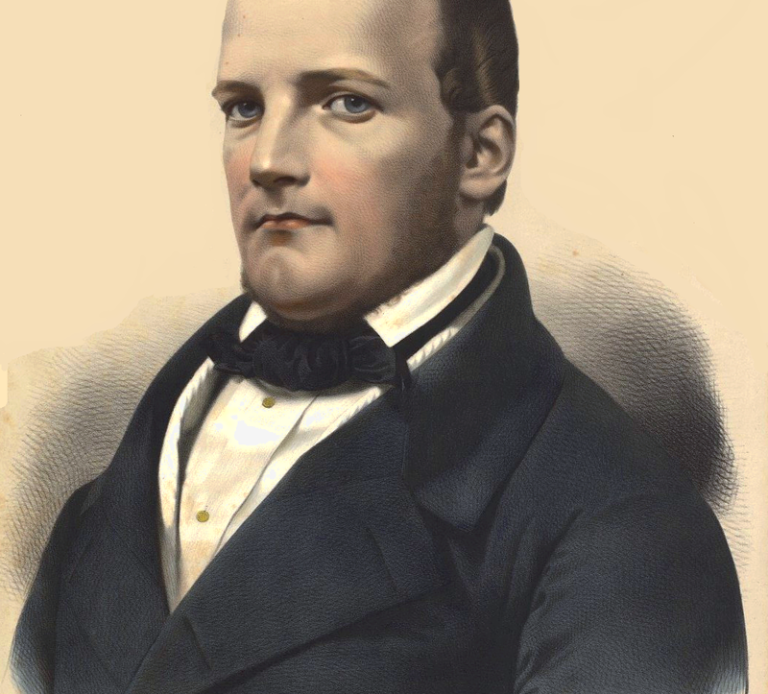
4. Juozapas Montvila, Monument, 4A Pranciškonų St.
Józef Montwiłł (1850–1911). The monument to Montwiłł was erected in 1931 to mark the 20th anniversary of his death (sculptor Bolesław Bałzukiewicz).
Montwiłł was a public figure who founded and supported more than 20 civic and charitable organisations, including schools of music and art, the “Lutnia” music society, an organisation for children’s summer camps and care, an orphanage, a shelter, an employment office, and the Vilnius Society of Friends of Science.
He was also a businessman and banker, and initiated the construction of numerous buildings and neighbourhoods known as “colonies”. Born in the vicinity of Kėdainiai, he graduated from a Vilnius gymnasium and later studied in St Petersburg. He lived in Vilnius from 1885 until his death.
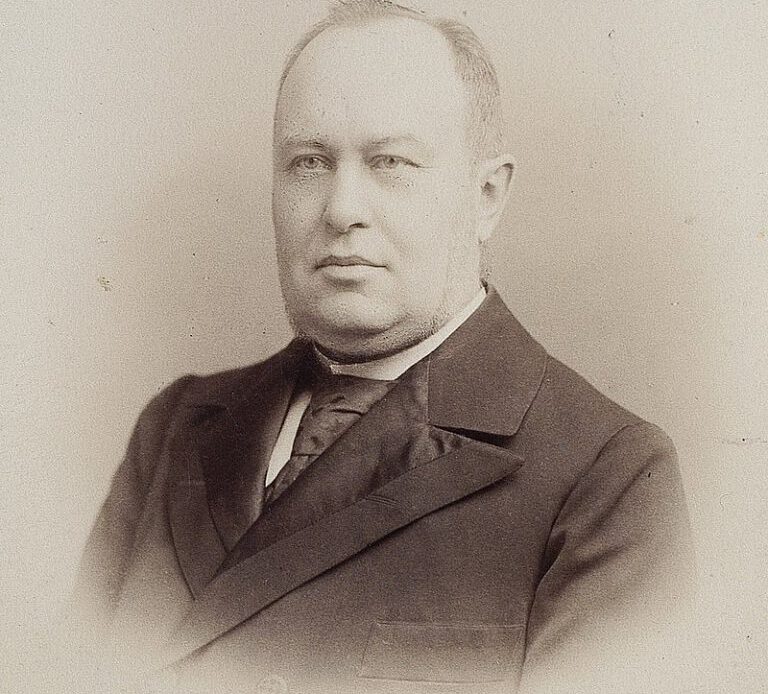
5. Jonas Kristupas Glaubicas, Former House, 20 Vokiečių St.
Johann Christoph Glaubitz (1700–1767). Do you know what the Church of St Catherine, the Church of the Missionaries, the Church of St John and its bell tower, and the Basilian Gate have in common?
These churches not only create Vilnius’s distinctive cityscape, but were all designed by Glaubitz, the most prominent Baroque architect in Vilnius, who developed the style known as the “Vilnius Baroque School”.
The architect, who came from Silesia, was invited to Vilnius by the Lutheran community in 1737, following a major fire. Glaubitz created the Baroque interior of the Evangelical Lutheran Church and rebuilt the community’s house, which stood on this site.
Interestingly, although Glaubitz was a Lutheran, he was also commissioned by Catholics, Orthodox Christians and Jews. The architect designed the interior of the Church of the Holy Spirit and the now-lost Great Synagogue.
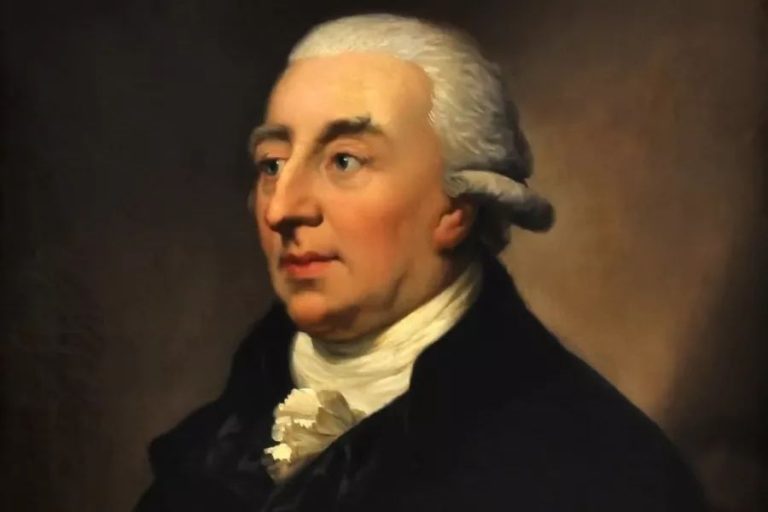
6. Barbora Radvilaitė, Monument, Vokiečių St. (at the intersection with Mėsinių St.)
Barbara Radziwiłł (Barbara Radziwiłłówna; c. 1522–1551). Take a look at the sculpture of Barbara Radziwiłł, the heroine of Vilnius’s most famous love story, Grand Duchess of Lithuania and Queen of Poland, located on Vokiečių Street. It was created in 1982 by sculptor V. Vildžiūnas.
In 1547, Barbara Radziwiłł secretly married Sigismund Augustus in Vilnius Cathedral, as the Polish nobility strongly opposed the marriage because she was not of royal blood. Only three years later did Sigismund succeed in having Barbara crowned Queen of Poland.
Unfortunately, Barbara Radziwiłł was queen for only a short time: six months later, the young ruler died in Kraków. Sigismund Augustus accompanied her body to Vilnius, where she was buried in the Cathedral.
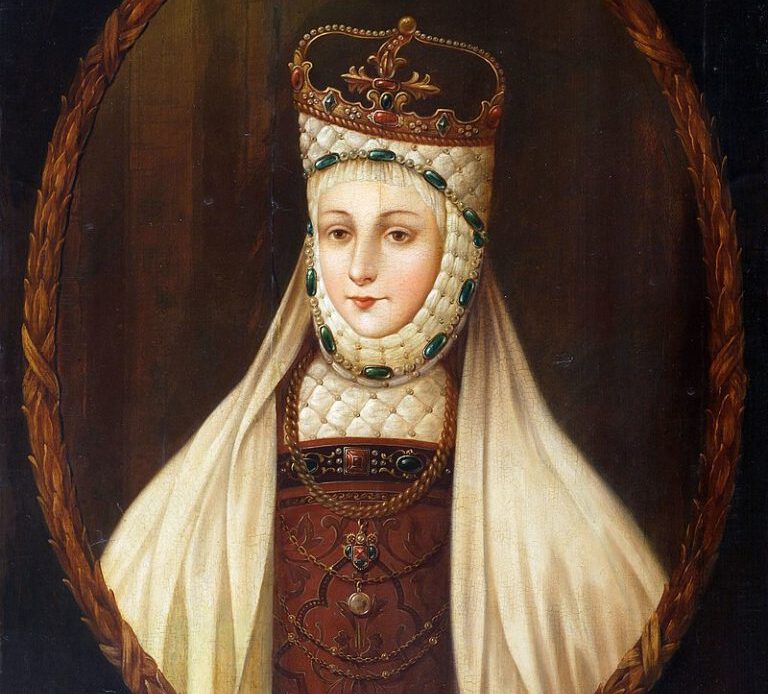
7. Elijas ben Saliamonas Zalmanas (Vilna Gaon), Monument, 3 Žydų St.
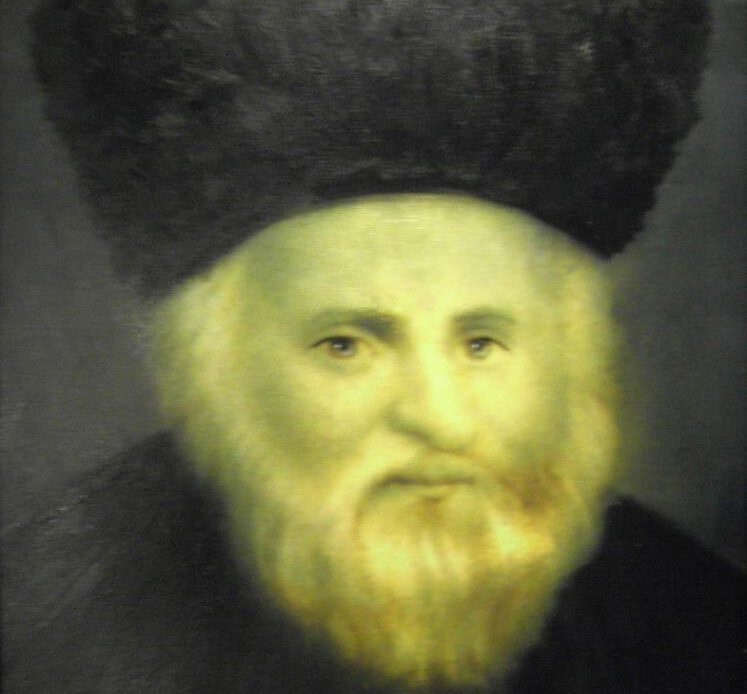
Elijah ben Solomon Zalman (Vilna Gaon, Der Vilner Goen, 1720–1797). Meet the man who helped make Vilnius a centre of flourishing Jewish culture in the 18th century, known as the “Jerusalem of Lithuania”, and visit the bust erected in his honour (sculptor Teodoras Valaitis) at the former site of his home.
The Vilna Gaon was a Jewish thinker and a scholar and commentator of the Talmud. His exceptional abilities and memory became apparent in childhood: from the age of seven, he studied under a rabbi from Kėdainiai, and from the age of ten, he independently studied mathematics and astronomy while continuing his Talmud studies.
After completing his travels around Europe in 1748, he returned to Vilnius and lived here until his death. He wrote more than seventy works on religious and scientific subjects.
8. Pranciškus Skorina, Plaque near 19 Didžioji St.
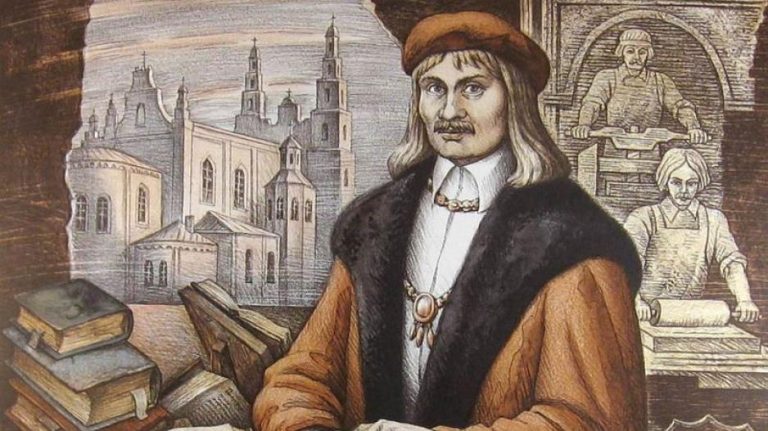
Franciscus Skorina (Franciscus Skorina, before 1490–before 1541). At the corner of Didžioji and Stiklių Streets, you will find a memorial plaque dedicated to Skorina – a printer in Vilnius and a doctor of liberal arts and medicine.
A printing house founded by Skorina once stood on this site. In 1522, he published the first book in the Grand Duchy of Lithuania here.
Skorina was born in Polotsk into a Ruthenian family and studied in Kraków and Padua. From 1517, he operated a printing house in Prague. After some time, he moved to Vilnius, but when his printing house burned down in 1530, he returned to Prague.
9. Jonas Basanavičius, Monument, Dr. J. Basanavičius Square (in front of the Philharmonic Hall)
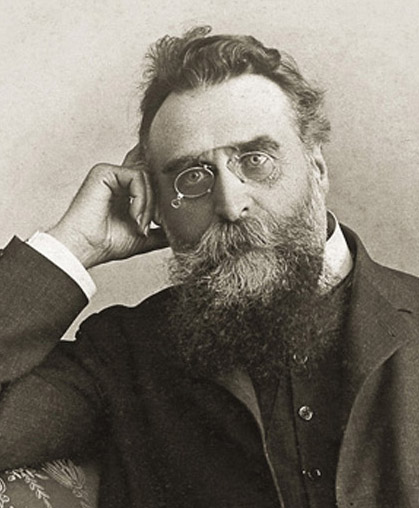
Jonas Basanavičius (1851–1927). The sculpture of Basanavičius, created by G. Piekuras, has stood in front of the Vilnius Philharmonic Hall since 2018.
Basanavičius was a physician, folklorist, ideologist of the Lithuanian national movement, and a signatory of the 1918 Act of Independence of Lithuania, known as the Patriarch of Lithuania.
Born in the vicinity of Vilkaviškis, he graduated from the Marijampolė Gymnasium and Moscow University. He founded the first Lithuanian monthly newspaper, Aušra, and established the Lithuanian Scientific Society.
From 1905 onwards, he lived in Vilnius intermittently. He was one of the initiators of the Great Seimas of Vilnius in 1905 and chaired the Lithuanian Conference of 1917, at which the Council of Lithuania was elected. On 16 February 1918, the Council adopted the Act of Independence of Lithuania.
10. Česlovas Milošas, Miłosz Stairs, 1 O. Šimaitės St.
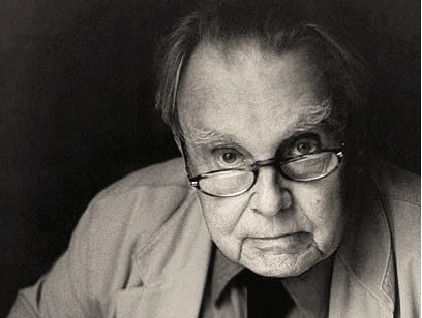
Czesław Miłosz (1911–2004). The Polish writer and Nobel Prize laureate Czesław Miłosz spent part of his life in Vilnius, where he studied. The stairs on O. Šimaitės St. are named after the writer.
Miłosz was born in the vicinity of Kėdainiai and moved to Vilnius with his family in 1921. He graduated from the Sigismund Augustus Gymnasium and studied law at Vilnius University.
From 1937, Czesław Miłosz moved to Warsaw. He later sought political asylum in France, and ten years later became a professor in the Department of Slavic Languages and Literatures at the University of California, Berkeley. He was awarded the Nobel Prize in Literature in 1980.
11. Jascha Heifetz, Memorial Plaque, 27 Maironio St.
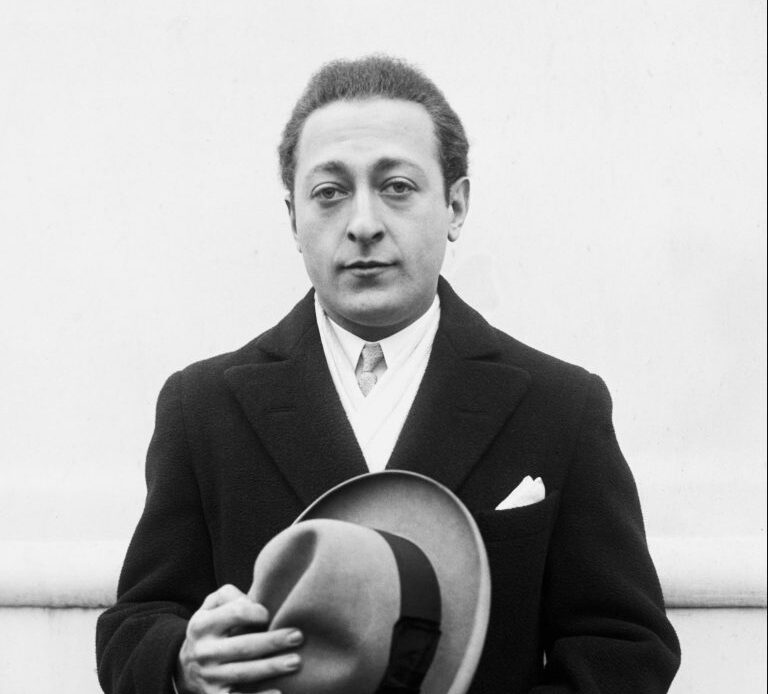
Jascha Heifetz (1901–1987). The memorial plaque at 27 Maironio St. commemorates Heifetz, a world-famous Jewish violinist born in Vilnius, known as the “King of Violinists”.
His violinist father began teaching him at the age of three, and from the age of five Heifetz studied at a music school. At the age of ten, he entered the St Petersburg Conservatory and soon began touring around the world.
In 1917, he moved to America with his family, and achieved his greatest fame during the 1920s and 1930s.
12. Marija Šlapelienė, House, 40 Pilies St.
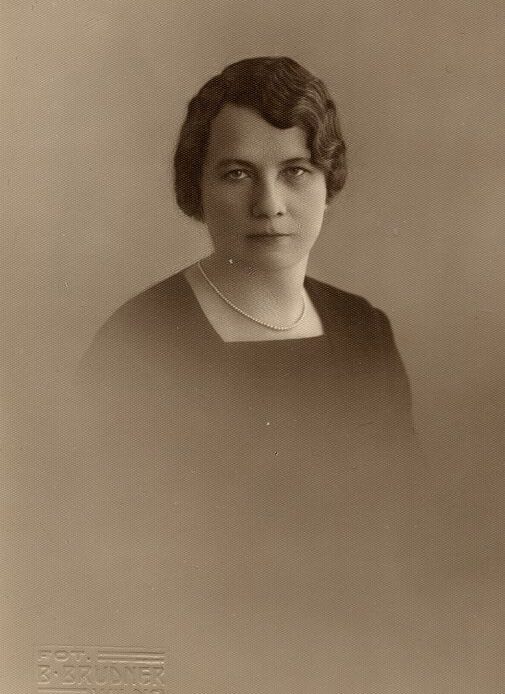
Marija Šlapelienė (1880–1977). Did you know who established the first Lithuanian bookshop in Vilnius? We invite you to visit the Marija and Jurgis Šlapeliai House-Museum and learn more about Šlapelienė, a Lithuanian bookseller and public figure who founded the first Lithuanian bookshop (1906–1949).
The bookshop became a centre for promoting Lithuanian culture and identity, was also involved in publishing, issued around 50 books, and operated as a library.
Šlapelienė was born in Vilnius and lived there until her death. From 1926, she lived with her husband Jurgis in their own house at 40 Pilies St., which was nationalised after the war. After the house was returned to the family in 1996, Marija’s daughter Gražutė Šlapelytė-Sirutienė donated it to the City of Vilnius. Today, it houses the Marija and Jurgis Šlapeliai House-Museum.