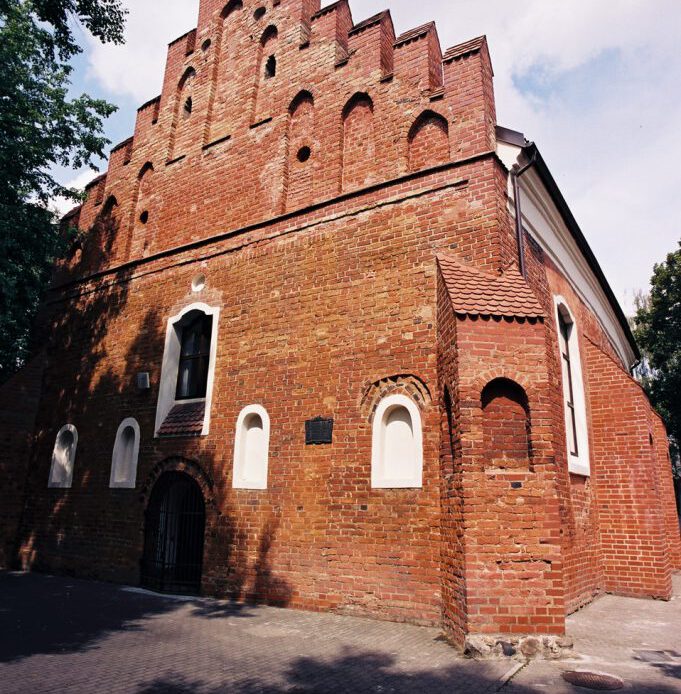
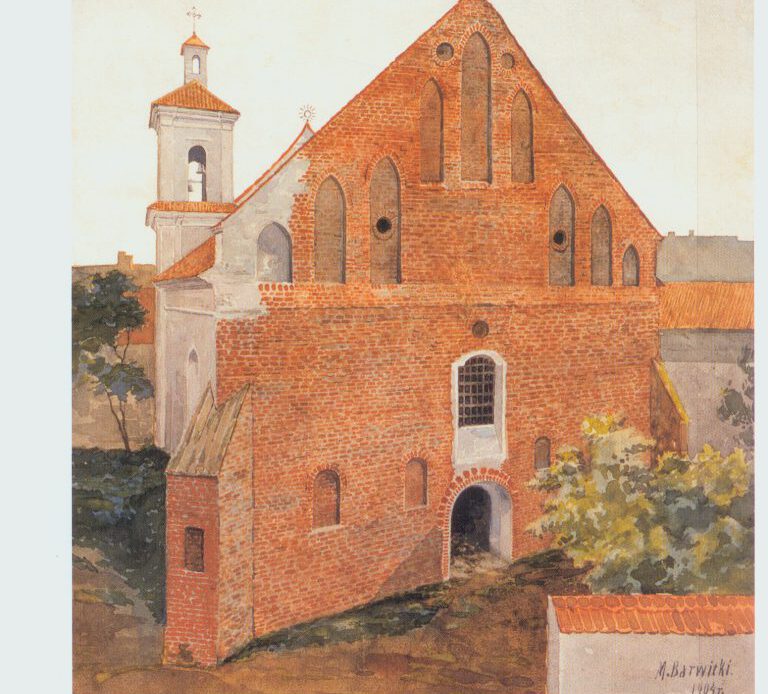
1. Church of St Nicholas (Gothic), 4 Šv. Mikalojaus St.
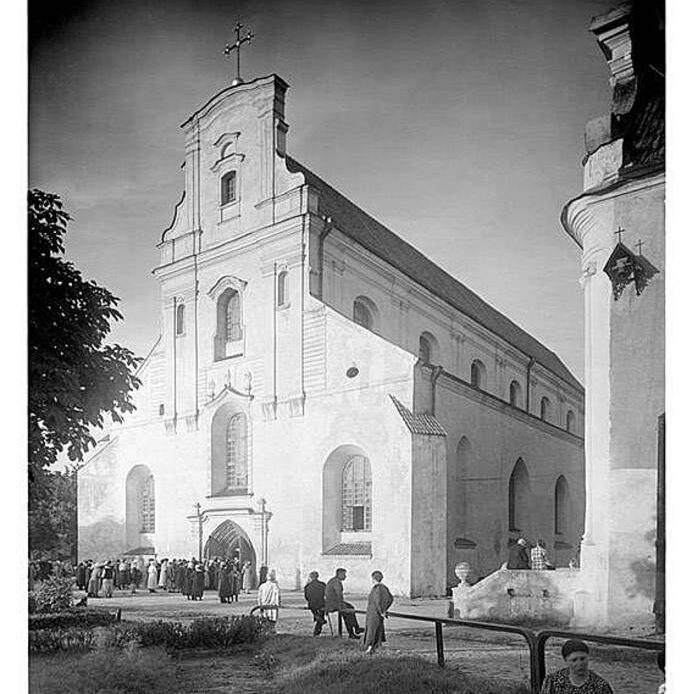
Did you know that the Church of St Nicholas is one of the oldest churches in Vilnius? The church has preserved the characteristic Gothic forms of the 14th century. First, take a look at the exterior of the red-brick building, where you can see forms characteristic of Early Gothic architecture – a stepped gable (the triangular upper part of the building) and side buttresses (projecting supports that reinforce the walls). Step inside as well, where you can see painted Gothic vaults.
At the beginning of the 20th century, this was the only church in Vilnius where services were held in Lithuanian. Lithuanian intellectuals gathered here, including several future signatories of the 1918 Act of Independence of Lithuania.
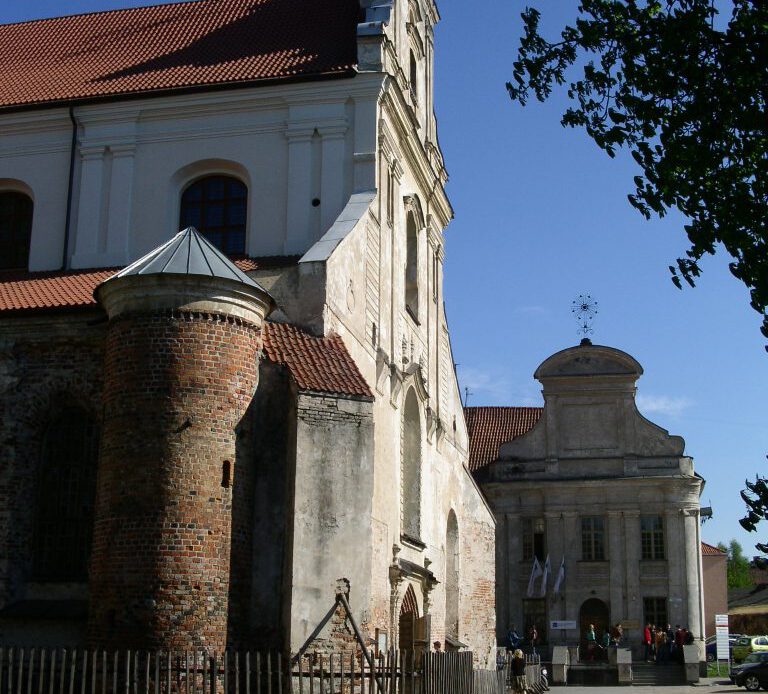
2. Franciscan Church (Gothic), 1A Pranciškonų St.
In this church, you can see how Gothic and Baroque architectural forms blend together. The lower part of the building is 16th-century Gothic brick masonry with an entrance portal in the shape of a pointed arch. The round corner turret and the walls are decorated with a pattern of blackened bricks.
Pay attention to the crystal-shaped vaults that have survived in the southern nave. In the 18th century, the church underwent a Baroque reconstruction: the central section was raised, and the vaults and walls were decorated with Baroque paintings.
Since 1998, the church has been returned to the Conventual Franciscan friars, whose efforts have made the ongoing restoration work possible.
3. Church of St Catherine (Baroque), 30 Vilniaus St.
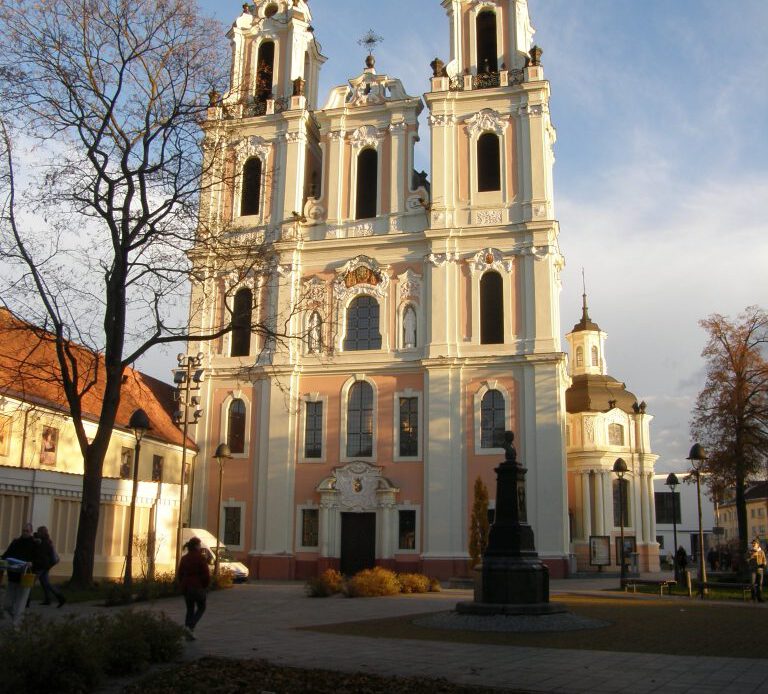
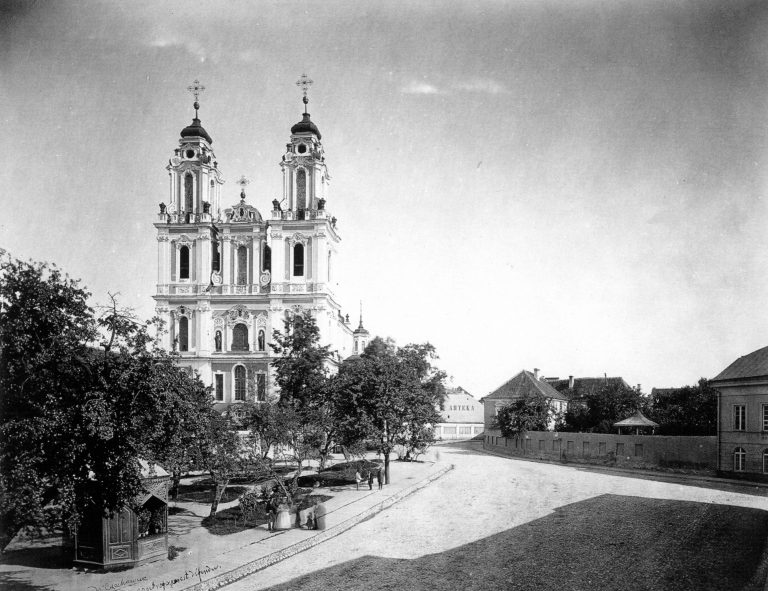
The church was reconstructed in the Baroque style in the mid-18th century by the famous Vilnius Baroque architect Johann Christoph Glaubitz, who came from Silesia and worked in Vilnius from 1737 to 1767. He created the twin-towered façades and gables characteristic of Vilnius Baroque architecture and added a side chapel.
The church was closed after the war and stood abandoned for a long time. Today, the restored church houses a concert hall.
Audio player
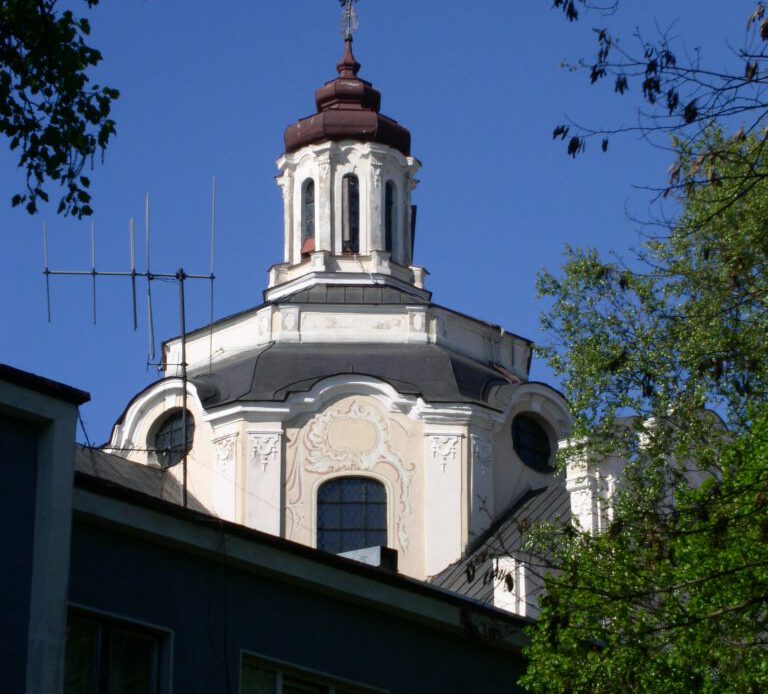
4. Church of the Holy Spirit (Dominican Church) (Baroque), 8 Dominikonų St.
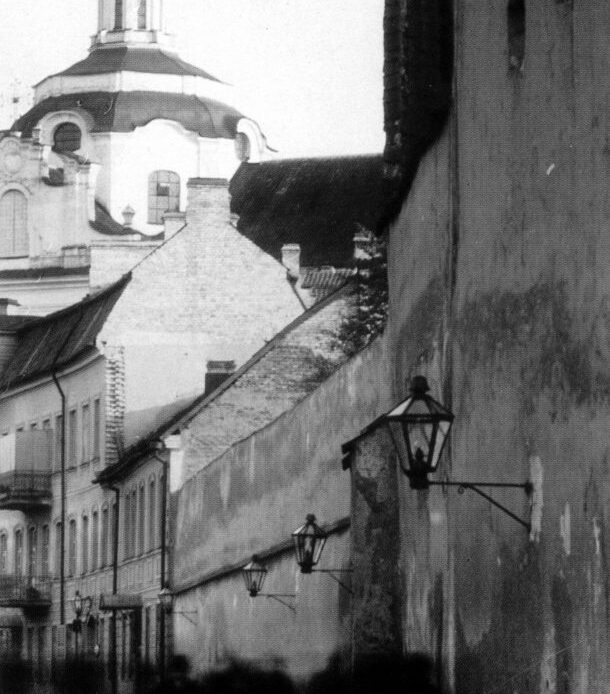
The church is valuable for its surviving Baroque details. Step inside and pay attention to the magnificent Baroque dome, the authentic ensemble of 16 Baroque altars, the wall paintings, and the 18th-century organ created by the master Adam Casparini, who came from Königsberg.
All of this has survived because the church was not closed even during the Soviet era. Services in Lithuanian and Polish are held here regularly.
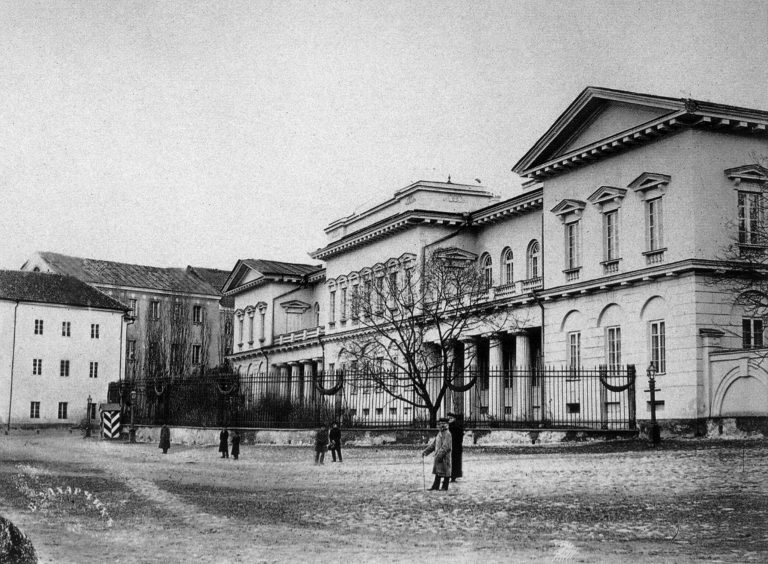
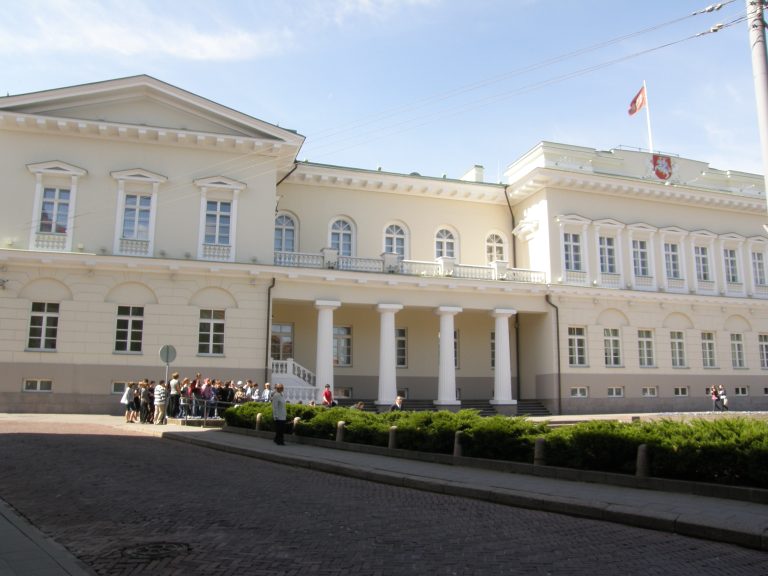
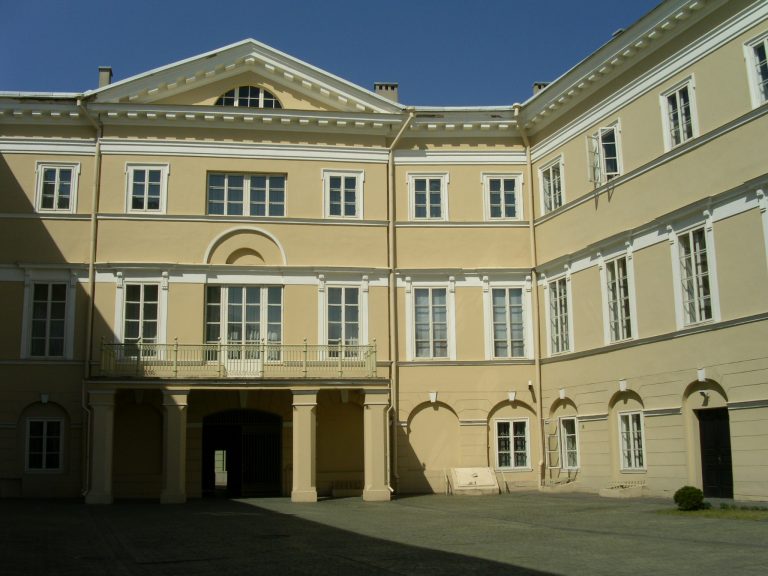
5. Presidential Palace (Neoclassical), 3 S. Daukanto Sq.
The site of the present-day Presidential Palace was formerly occupied by the Bishops’ Palace, which had stood here since the 14th century and had a large garden. In the 19th century, the Russian imperial authorities decided to relocate the bishops and establish a government institution, the Governor-General’s Office, in their place.
The design for the new complex was created by the St Petersburg architect V. Stasov. The palace is in a grand Late Neoclassical style. The façades and spacious courtyard are decorated with colonnades, and you can also notice other Neoclassical details, such as reliefs and window surrounds.
During the Soviet era, the building housed the House of Artists. After the restoration of Lithuania’s independence, it was decided that the building was the most suitable location for the Presidential Palace. During the restoration, the 19th-century Historicist-style interior was carefully recreated.
The Presidential Palace can be visited during free guided tours.
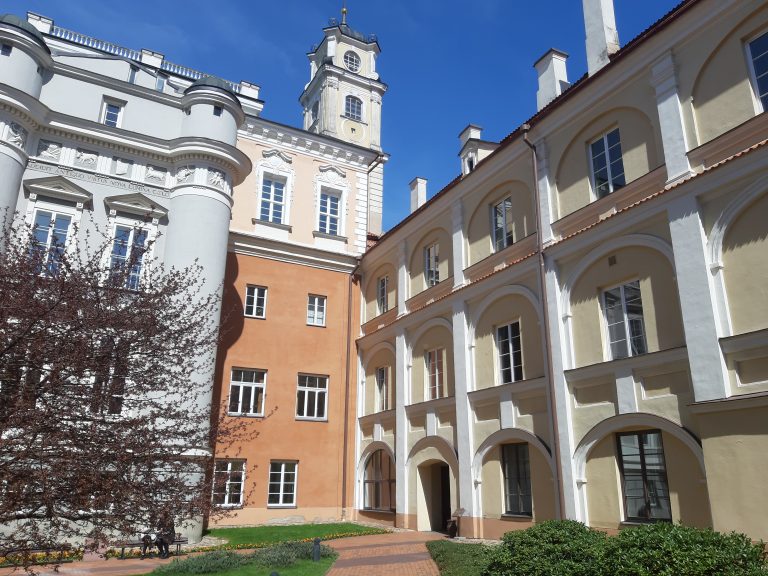
6. Vilnius University Ensemble (Renaissance, Baroque), 3 Universiteto St.
Vilnius University was founded in 1579 by Jesuit monks, who had been invited to Vilnius by the bishop to fight against the Reformation. Over the centuries, the university expanded, and today the complex consists of buildings surrounding 13 courtyards, as well as a library, an observatory, and the Church of St John.
One of the ensemble’s greatest values is that throughout its 444-year history, it has retained its authentic forms and has been carefully restored on numerous occasions. Particularly impressive are the Renaissance arcades of the Great Courtyard and Observatory Courtyard, as well as the uncovered wall paintings.
In preparation for the 400th anniversary, the university’s corridors were decorated with new frescoes by P. Repšys and A. Kmieliauskas, as well as works by other prominent artists of the time. The historic interiors of Vilnius University can be explored during guided tours.
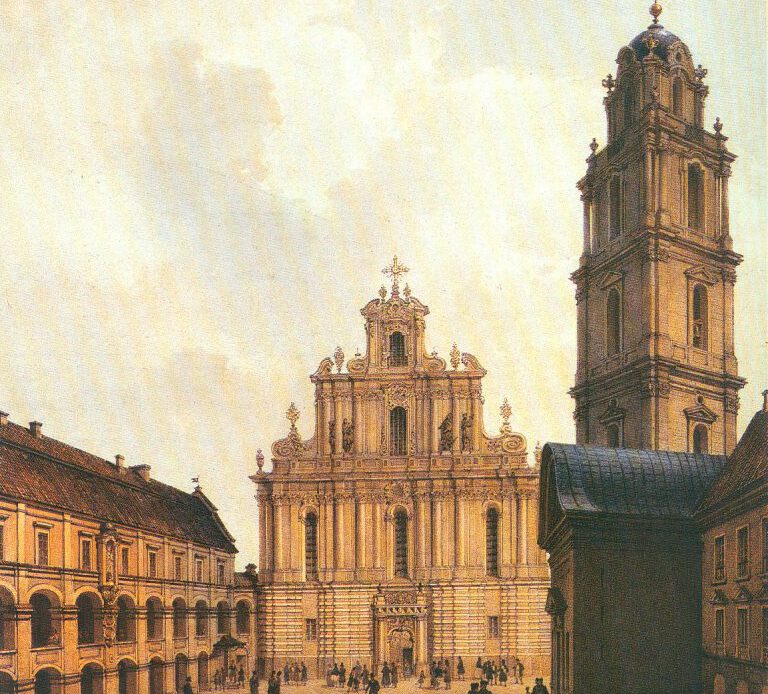
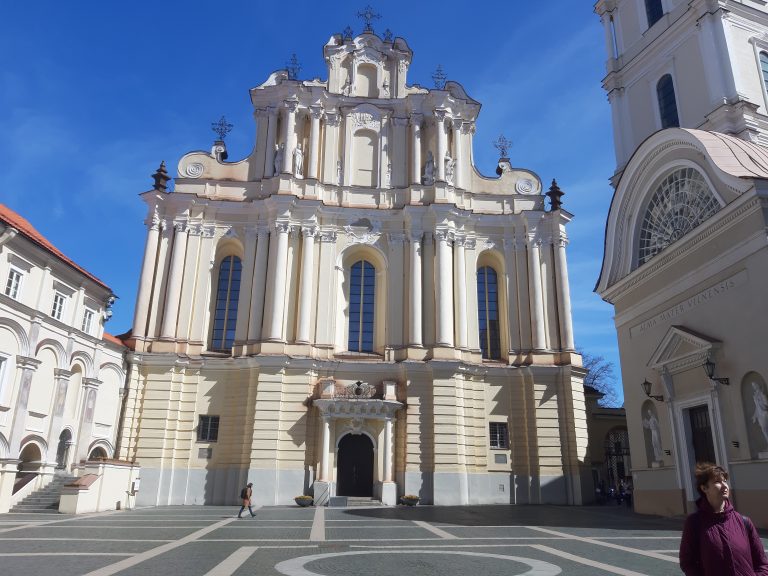
7. Church of St John (Baroque), 12 Šv. Jono St.
The church was built in the 14th century in the Gothic style and rebuilt in the Baroque style in the 17th century. It was severely damaged by the fire of 1738. Following the fire, architect J. K. Glaubitz prepared the reconstruction design. He created a new Late Baroque façade and an ensemble of ambulatory altars, the only one of its kind in Lithuania.
During the Soviet era, the abandoned church was used as a warehouse. However, in preparation for the 400th anniversary of the University, it was restored and a Museum of Science was established there.
Today, the church is used by Vilnius University, and diploma ceremonies and concerts are held here.
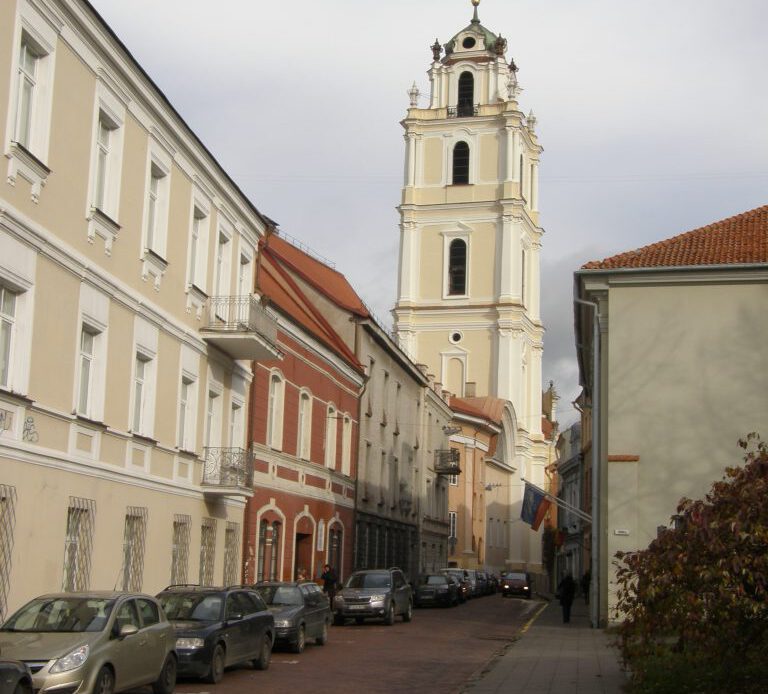
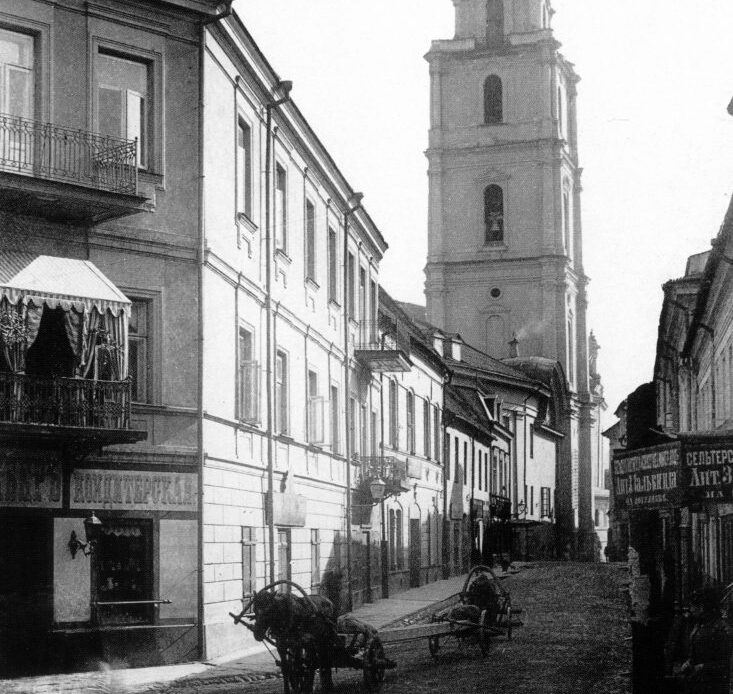
8. Bell Tower of the Church of St John (Baroque), 12 Šv. Jono St.
The bell tower was built at the beginning of the 17th century and was damaged by fires several times. After the fire of 1738, the bell tower was raised according to a design by J. K. Glaubitz, and the top three levels were decorated with Baroque forms.
At 68 metres, it is the tallest building in the Old Town. We invite you to visit the interior of the bell tower, climb to the top, and enjoy a panoramic view of the Old Town from the observation deck located 60 metres above ground. You can reach it either by lift or via the restored 18th-century wooden staircase.
9. Gothic House (Gothic), 12 Pilies St.
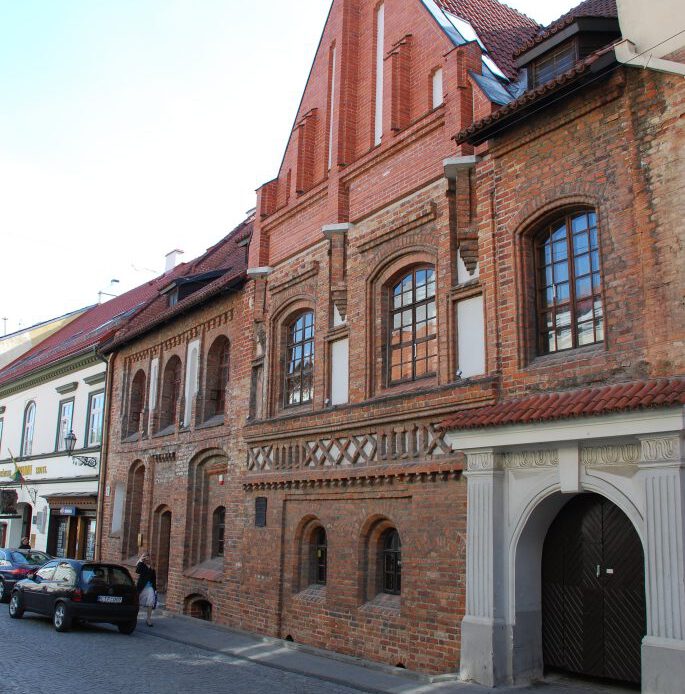
As you walk along Pilies Street, stop at number 12 – this is the best example in Vilnius of a 16th-century Gothic residential house. Goldsmiths, pharmacists and surgeons once lived here. The ground floor housed a workshop or shop, while the second floor contained living quarters.
You can spot details characteristic of Gothic architecture: the building is decorated with a gable (the triangular upper part of the building), white-plastered niches, and a frieze (a horizontal decorative band) featuring a brick ornament.
The house was damaged during the Second World War and restored in 1957–1960. It is one of the earliest examples of post-war restoration.
10. Church of St Anne (Gothic), 8 Maironio St.
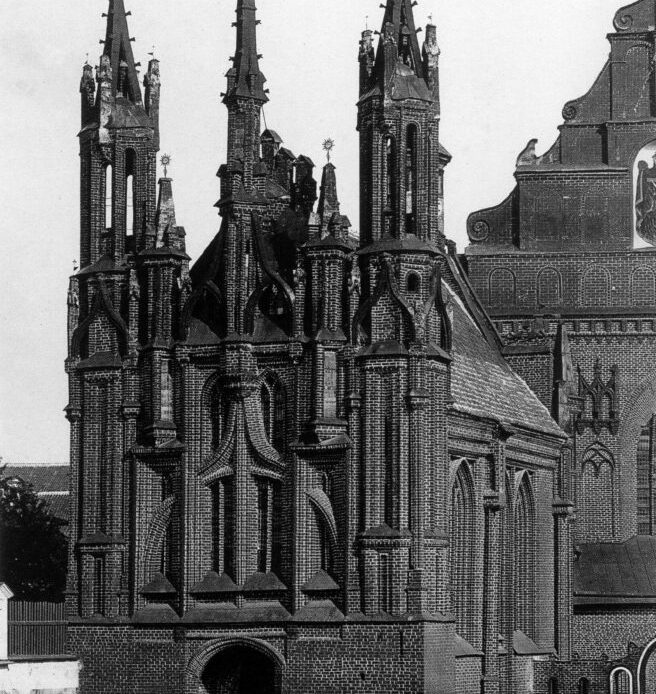
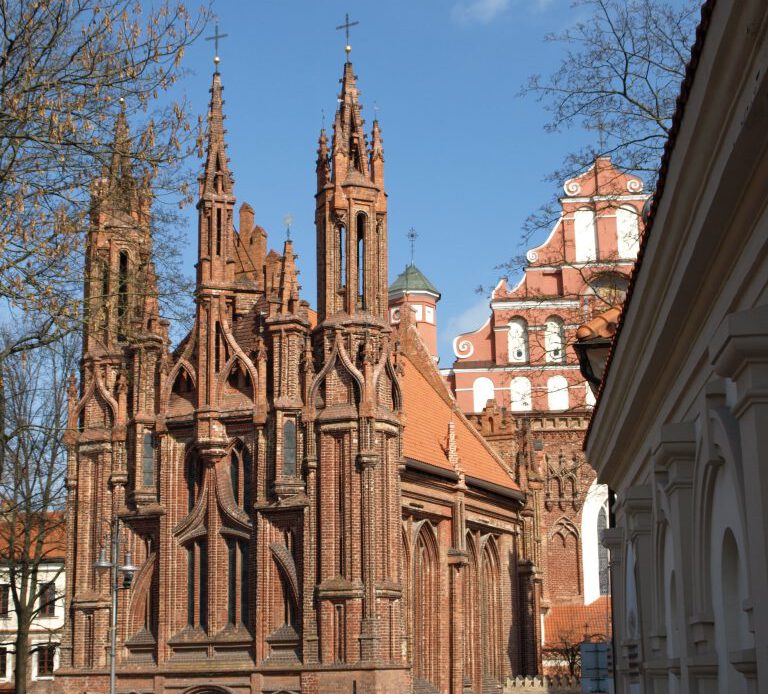
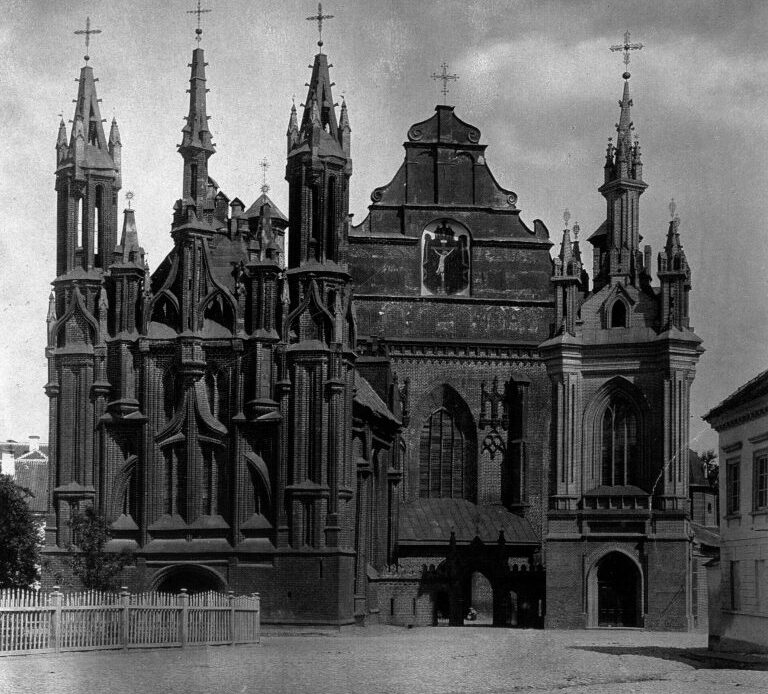
This is the most famous and artistically significant Late Gothic church in Lithuania. The church was built in 1501 and has survived almost unchanged to the present day; in the 20th century, it was restored several times. The church was founded by Grand Duke Alexander of Lithuania.
Its greatest artistic value lies in its twin-towered façade, composed of numerous forms created using as many as 33 types of bricks with different profiles.
11. Bernardine Church (Gothic), 6 Maironio St.
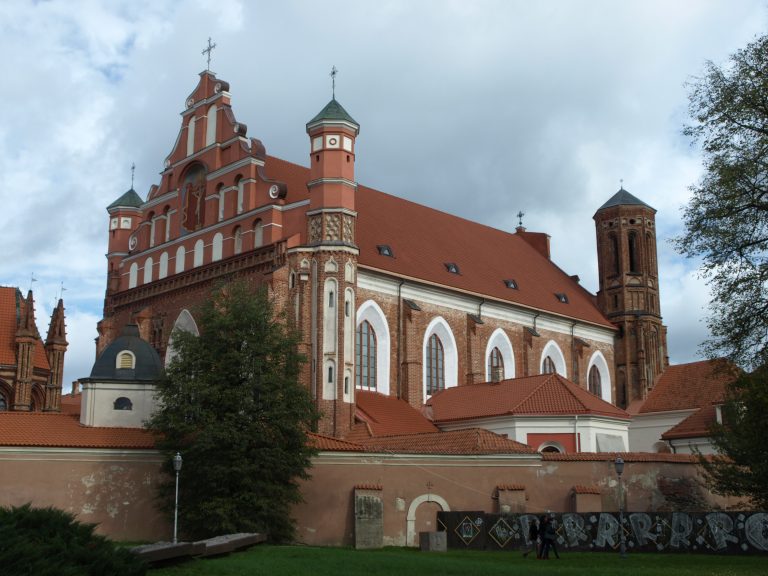
The nearby Bernardine Church and Church of St Anne, built around the same time, form a unique Gothic architectural ensemble. Unlike the Church of St Anne, the Bernardine Church was rebuilt several times in the 16th–17th centuries, which is why its gable features Renaissance and Baroque elements.
The bell tower and corner turrets have unique forms and decorations. The interior of the Bernardine Church is also particularly valuable, so be sure to visit the inside, where you can see the largest 16th-century frescoes in Lithuania and an ensemble of 18th-century wooden altars.
During the Soviet era, the church was used as a storage facility by the Art Institute. After the restoration of independence, the Franciscan friars returned to the church, and extensive restoration work began.
The church’s rich heritage can be explored during guided tours organised by the church’s Information Centre.
12. Church of St Michael (Renaissance), 9 Šv. Mykolo St.
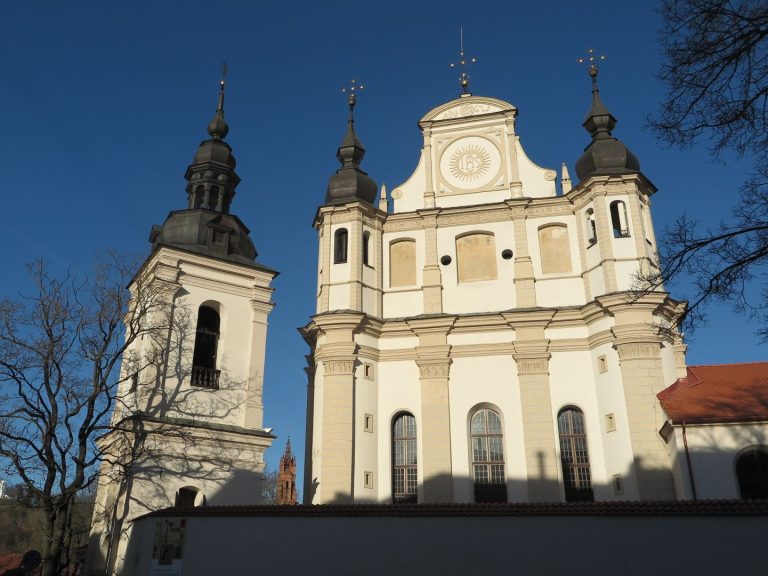
Only two Renaissance-style churches have survived in Vilnius – the Church of St Michael and the Church of St Stephen. We invite you to visit one of them – the Church of St Michael.
The church façade is Renaissance in style, plastered and decorated with painted rustication (rectangular panels). The turrets and bell tower are Baroque in form. The churchyard is particularly charming, enclosed by a fence with arched niches.
Inside, you can admire the Renaissance vaults, the only ones of their kind in Vilnius. The church’s founder, Leonas Sapiega, also established his mausoleum here.
Following restoration, the Church Heritage Museum was established in the church.
13. Church of the Most Holy Mother of God (Historicism), 14 Maironio St.
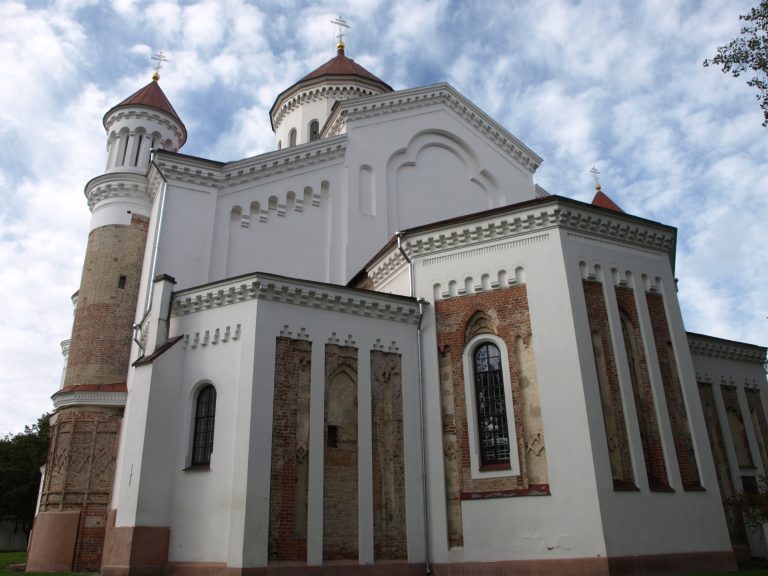
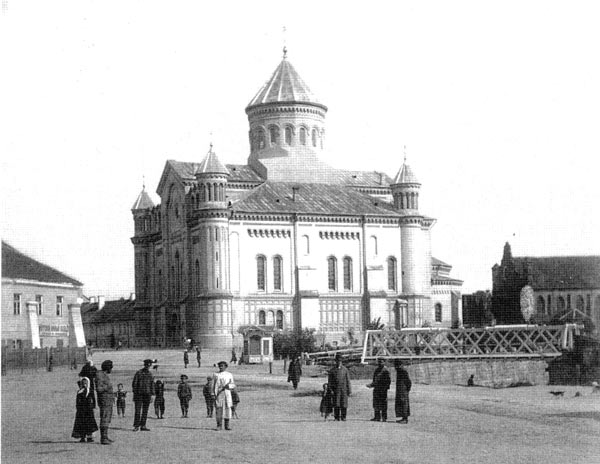
This is one of the earliest Orthodox places of worship, consecrated in 1348. It was founded by Maria of Vitebsk, the wife of Grand Duke Algirdas. The old church was Gothic, without a dome or towers.
Pay attention to the fragments of Gothic masonry that were discovered and exposed on the façade during restoration. The church’s present appearance was created in the second half of the 19th century. Today, it is a Neo-Byzantine-style building characteristic of Orthodox architecture.
14. Chodkiewicz Palace (Neoclassical), 4 Didžioji St.
This is an excellent example of a Neoclassical palace. Pay attention to the details: the window surrounds, the forms of the metal balconies, and the columns in the palace courtyard.
The palace belonged to the Chodkiewicz family. Karol Jonas Chodkiewicz was a prominent military commander of the Polish–Lithuanian Commonwealth (Grand Hetman), who won important battles at Salaspils and Khotyn.
Today, the palace houses the Vilnius Picture Gallery, where you can see the restored Neoclassical interiors of the palace.
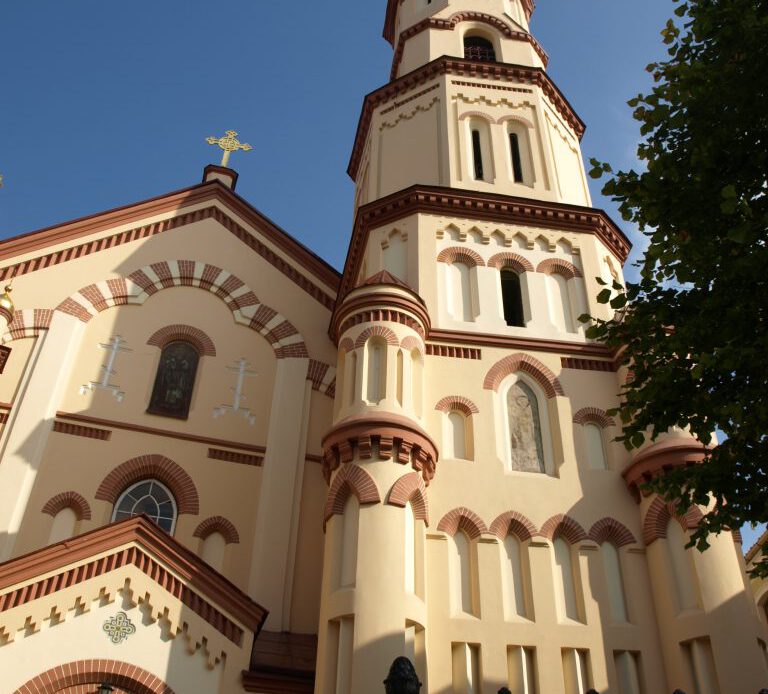
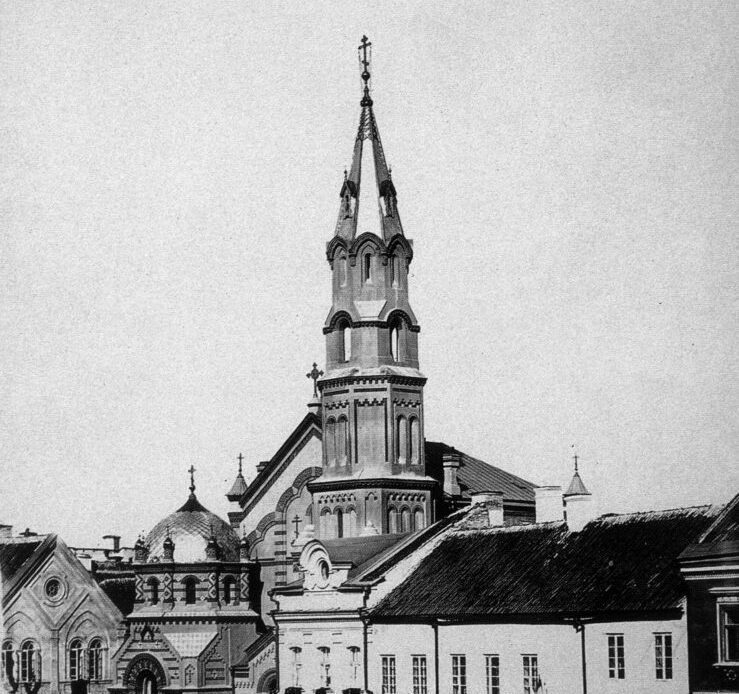
15. Church of St Nicholas (Historicism), 12 Didžioji St.
The masonry Gothic church was built in the 16th century. Its founder was Konstantyn Ostrogski, a prominent military commander (Grand Hetman), who won 31 battles, the most famous being the Battle of Orsha against Moscow.
In the second half of the 19th century, the church was rebuilt in the Neo-Byzantine style, but some Gothic details can still be seen, including the shape of the bell tower and the niches.
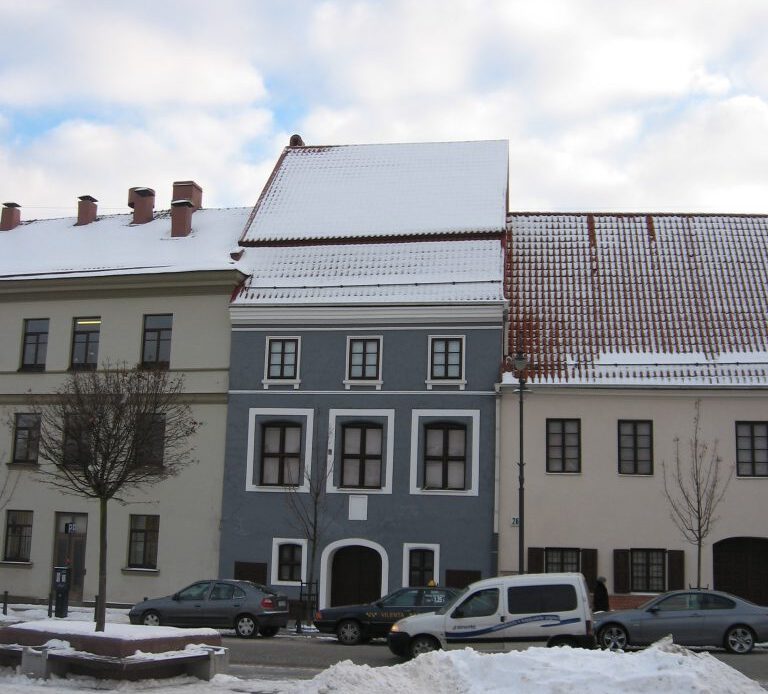
16. Merchants’ Guild (Gothic, Renaissance), 26 Didžioji St.
As you walk through Town Hall Square, pay attention to the buildings surrounding and enhancing the square. One of them is the 17th-century Renaissance building at 26 Didžioji St. Its symmetrical, grey-plastered façade has three floors.
The building formerly belonged to the Merchants’ Guild and housed their meeting hall, warehouses and inns. The two-storey Gothic house next door also belonged to the merchants.
Today, both buildings house the Kazys Varnelis House-Museum.
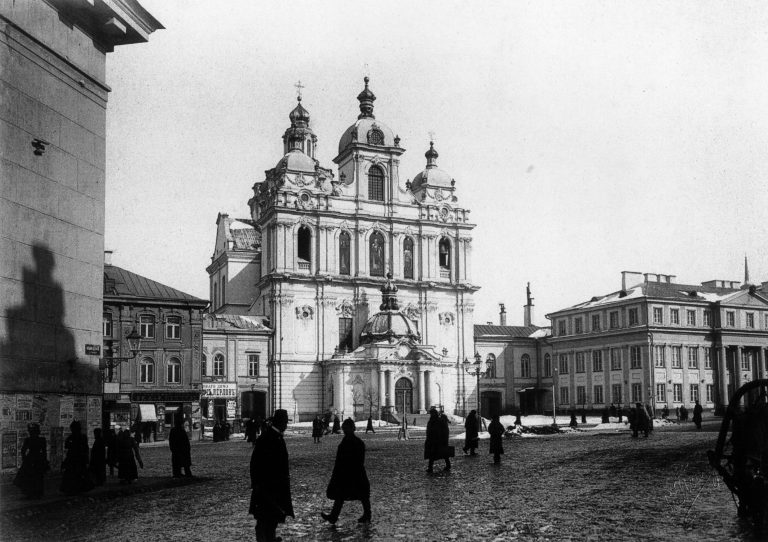
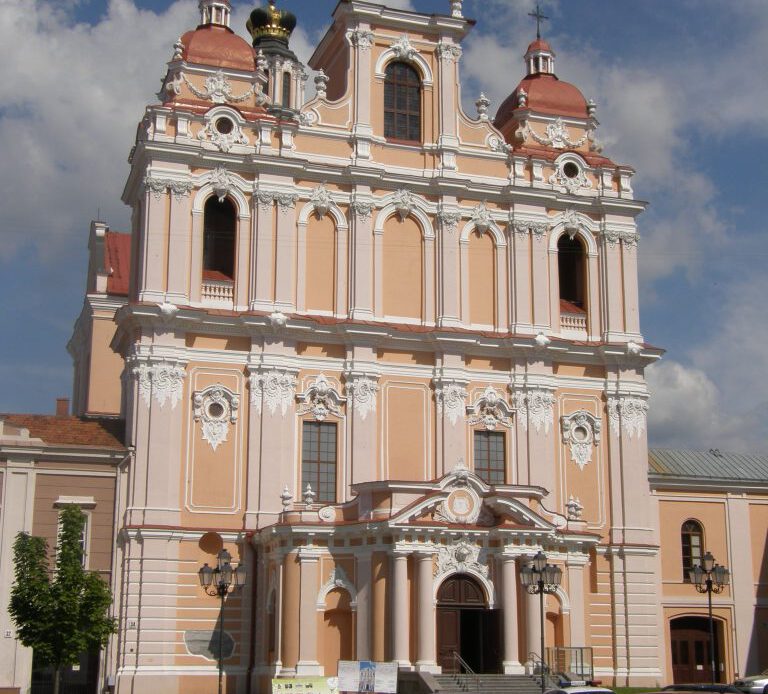
17. Church of St Casimir (Baroque), 34 Didžioji St.
This is the first Baroque church in Vilnius, built by the Jesuits in 1604 based on the Church of Il Gesù in Rome, the principal Jesuit church. The church is dedicated to Casimir, a Grand Duke of Lithuania and prince, who was canonised in 1602.
Pay attention to the magnificent dome, topped with a lantern in the shape of the crown of the Grand Duke of Lithuania. In the 19th century, the church was converted into an Orthodox church, and during the Soviet era it housed the Museum of Atheism.
Today, the church has been restored, new altar paintings have been created, and the 17th-century basement with frescoes can be visited.
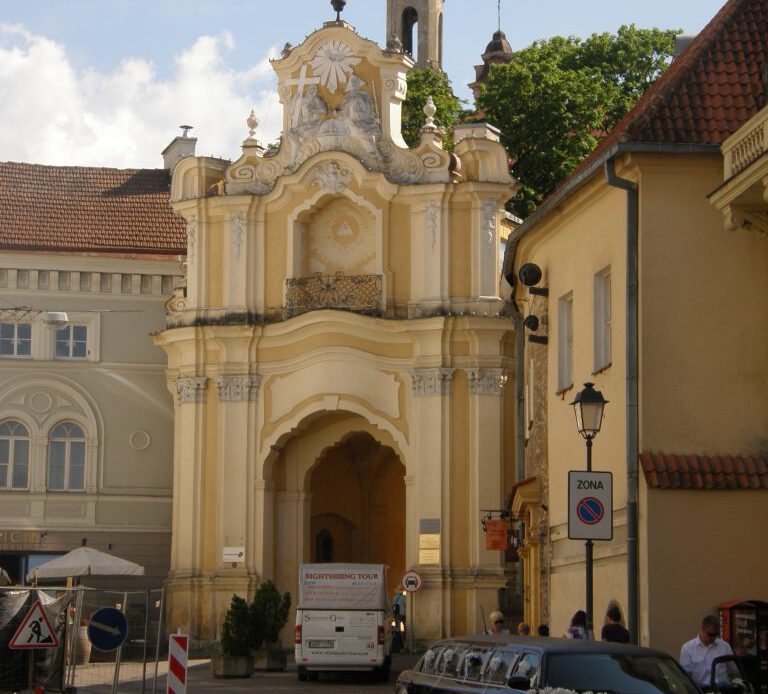
18. Church of the Holy Trinity (Greek Catholic, Baroque), 7B Aušros Vartų St.
This is the only Ukrainian Greek Catholic (Uniate) church in Vilnius, where services are held in Ukrainian. Uniates are Orthodox Christians who converted to Catholicism following the Union of Brest (1596), recognising the authority of the Pope while retaining the Byzantine rite and Church Slavonic language.
The most valuable part of the ensemble is the Baroque entrance gate and towers, designed by the architect J. K. Glaubitz. During the Soviet era, a construction laboratory operated in the church, and the interior was completely destroyed. Restoration work has been underway since 2014, and valuable wall paintings have been discovered and are being restored.
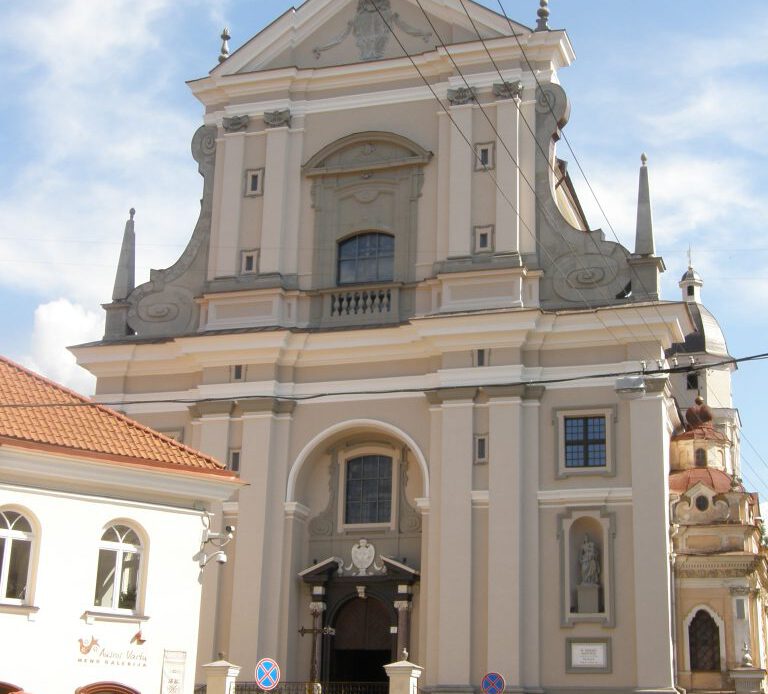
19. Church of St Teresa (Baroque), 14 Aušros Vartų St.
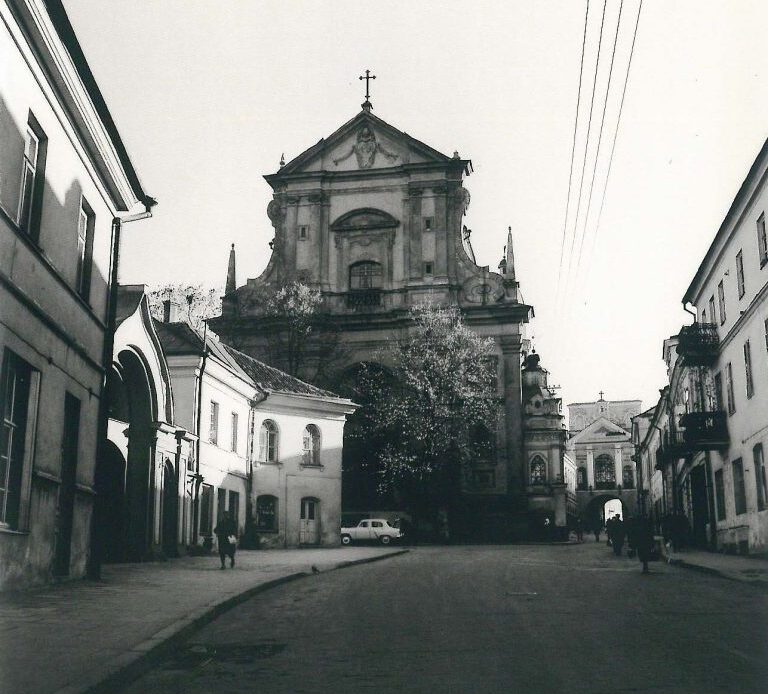
The church was built in the 17th century by Carmelite monks and designed by Italian architects. On the exterior, you can notice the towerless façade characteristic of the Early Baroque and large volutes (spiral-shaped decorative elements) connecting the two levels of the building.
The Baroque façade forms a beautiful ensemble with the Chapel of the Gate of Dawn visible at the end of the street. Pay attention to the coat of arms on the church’s pediment (the triangular upper part of the building), featuring a double heraldic lily – the coat of arms of the church’s founder, Stephen Pac, Deputy Chancellor of the Grand Duchy of Lithuania.
The Church of St Teresa was never closed, and its 18th-century interior is decorated with frescoes depicting the life of St Teresa.
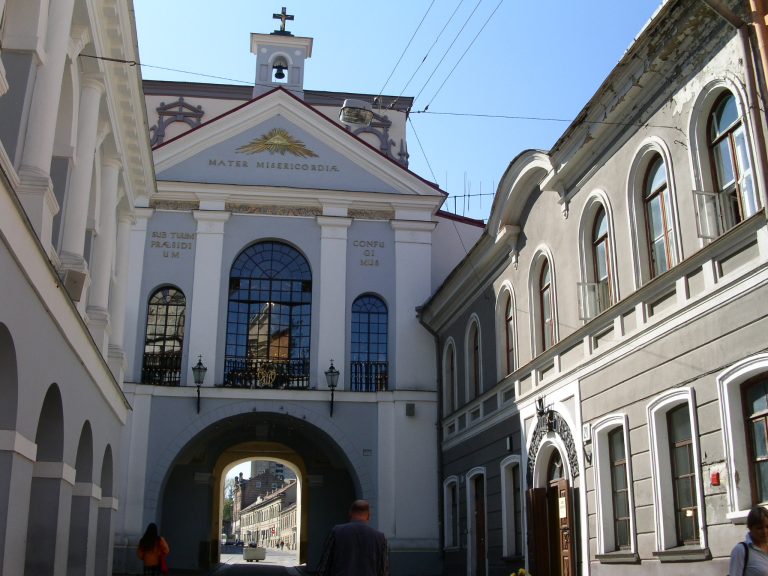
20. Chapel of the Gate of Dawn (Neoclassical), 14 Aušros Vartų St.
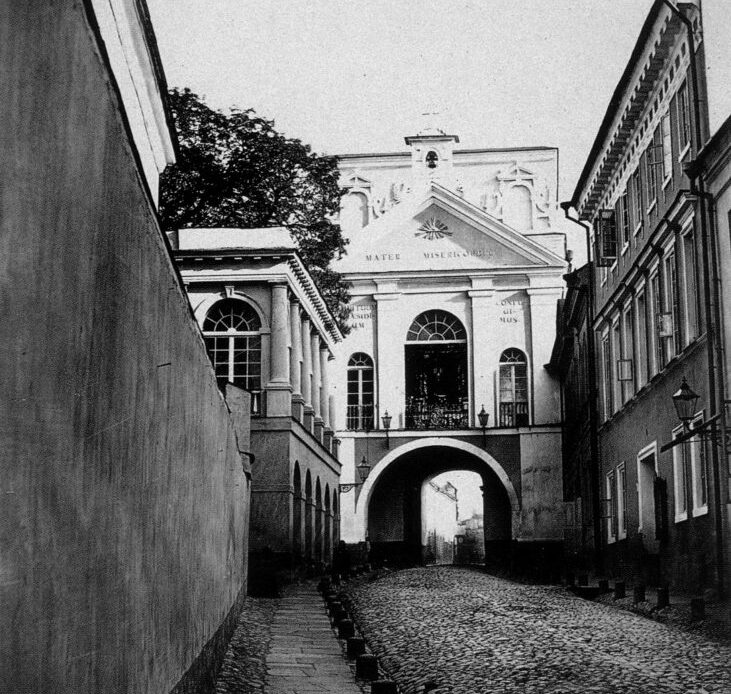
The chapel was reconstructed in 1829 in the Late Neoclassical style. The pediment (the triangular upper part of the building) is decorated with the Eye of Providence – a symbol of God’s protection – and the Latin inscription Mater Misericordiae, meaning “Mother of Mercy.”
Through the arched window, you can see the miraculous image of the Virgin Mary with gilded riza and crowns. Mass is held in the chapel every day in Lithuanian and Polish.