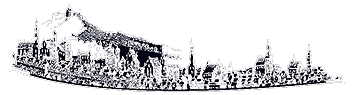
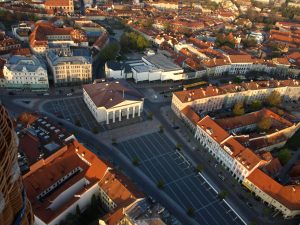
Many of the streets in Vilnius Old Town lead to Town Hall Square, with the main streets intersecting precisely here. Around the 15th century, the intersection of the city’s main roads led to the formation of the triangular-shaped square. From the north came the road from the castle area (today’s Pilies and Didžioji Streets), from the west the road from Riga (today’s Vokiečių St.), and from the south the road from Medininkai and the former Ruthenian lands (Aušros Vartų St.).
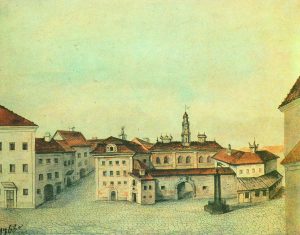
Town Hall Square was never built up. This is known from archaeological research, which found only a few fragments of small masonry buildings beneath the square. In the 16th century, the square was used for trade and public punishments were carried out here; a “pillory” also stood in the square.
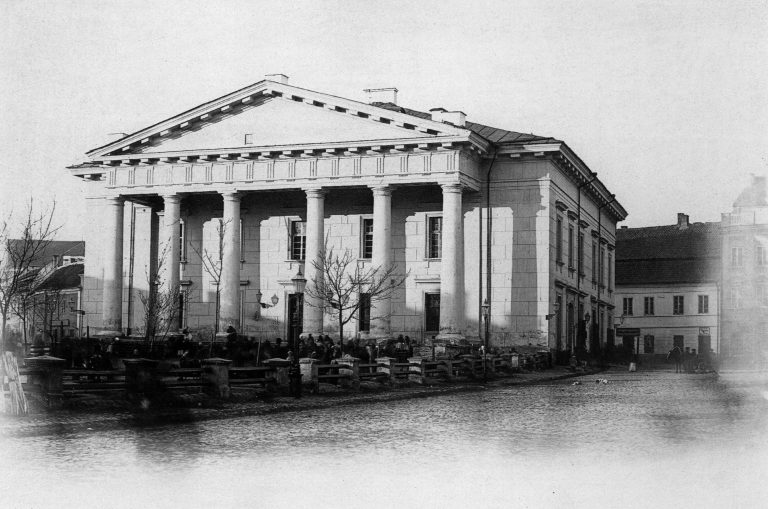
In the 19th century, the square was enclosed by a fence and planted with trees, while the Town Hall building housed a city theatre. In 2005, Town Hall Square was renovated, with new paving, benches and a fountain installed, and trees planted. Today, events for city residents are held in the square.
2. Vilnius Town Hall
Vilnius Town Hall has not always looked as it does today. The building has been rebuilt several times, but it has always stood in the same location. The oldest Town Hall building is mentioned as early as 1503; at that time, its main entrance and the square faced the Church of St Casimir.
The city government, then known as the magistrate, worked in the Town Hall. Courts were held here, merchants’ council meetings took place, goods were assessed and taxed, the city’s most important documents and weapons were kept, and the city prison operated in the basement.
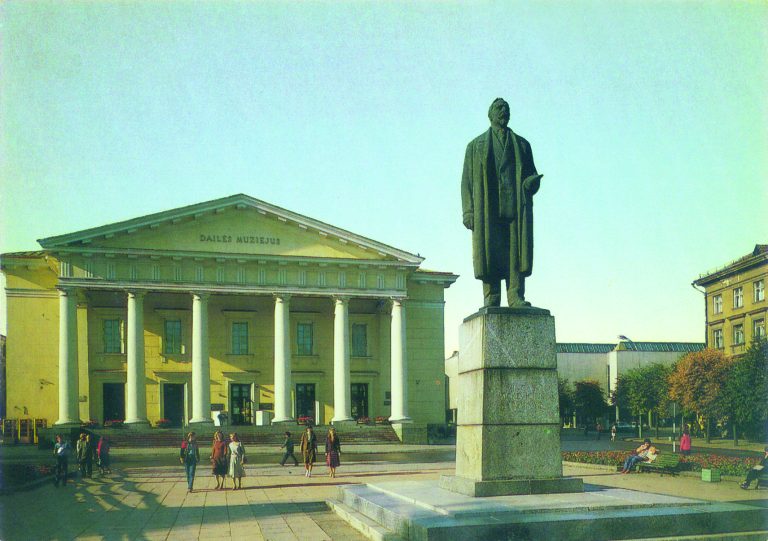
The Town Hall acquired its present Neoclassical appearance in 1799, following reconstruction based on a design by the architect Laurynas Gucevičius. The exterior of the building has remained almost unchanged to the present day.
From 1845 to 1925, the city theatre operated in this building, after which it stood abandoned for some time. From 1944 to 1995, the Town Hall housed the Lithuanian Art Museum. Since 1999, it has been home to the public institution “Vilnius Town Hall”, dedicated to presenting the capital’s culture. Exhibitions, concerts, conferences and ceremonial events are held here.
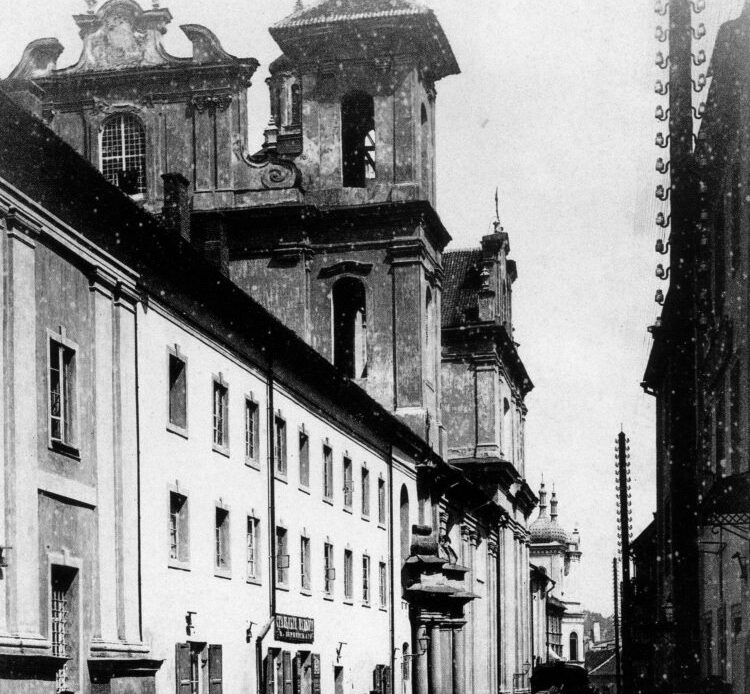
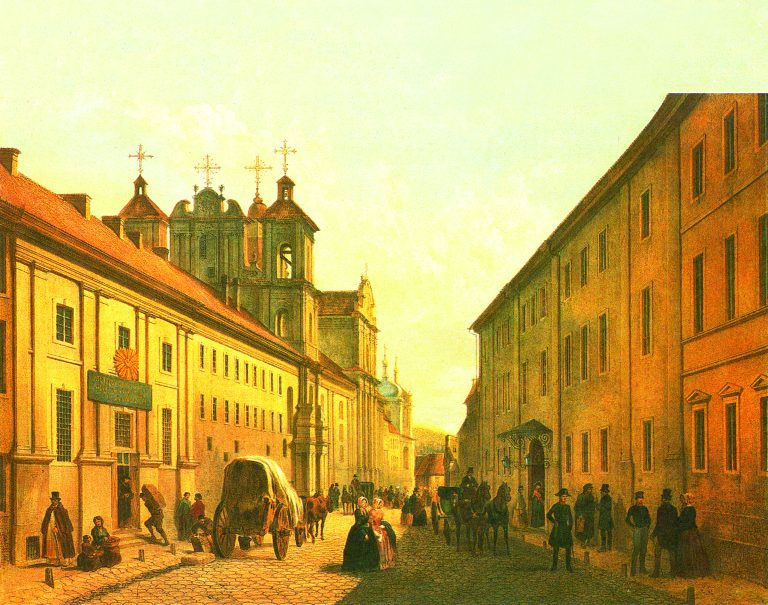
3. Former Magistrate, 4 Dominikonų St.
The Vilnius magistrate operated from 1844 in the former Sapieha Palace, which no longer survives and once stood on the site of the present-day Salomėja Nėris Gymnasium. During the rule of Tsarist Russia, after the Lithuanian Statute was abolished in 1840 and Vilnius lost its Magdeburg rights, the self-government of the city’s residents was abolished. From then on, the city government changed its name several times (duma, city council, council of deputies) and moved its headquarters to different locations.
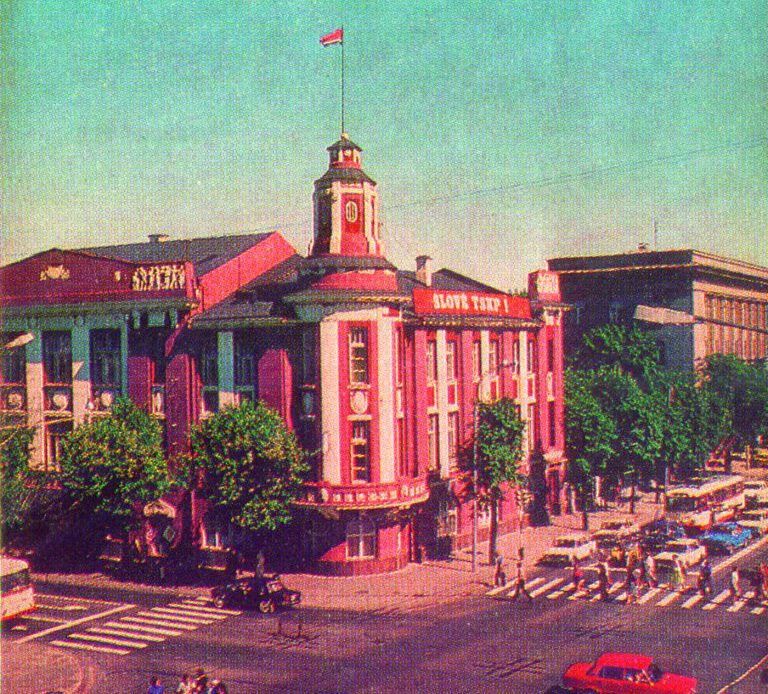
4. Former Executive Committee and Council of Deputies, 35 Gedimino Ave.
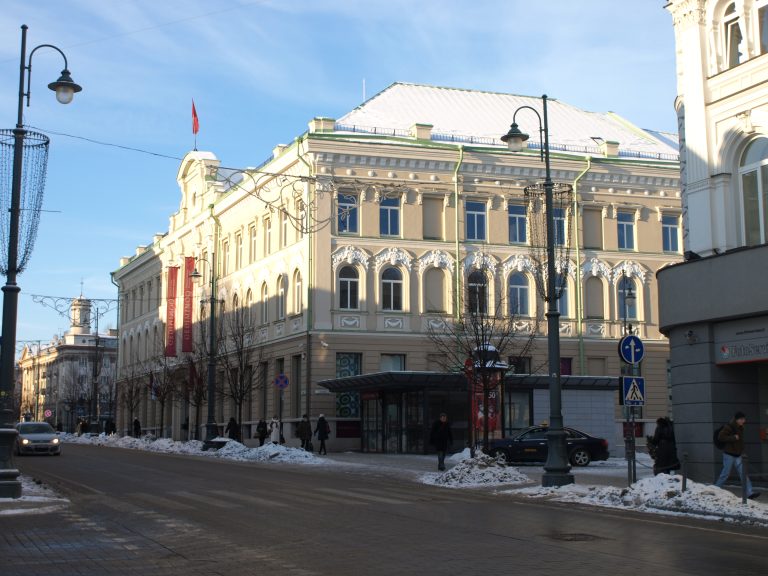
From 1944 to 1990, the city government – the Executive Committee and Council of Deputies – was based in the building at 35 Gedimino Ave. This Art Nouveau building was constructed in 1913 by a public organisation, the Merchants’ Club, whose members at the time included the wealthiest residents of Vilnius, among them the building’s architect, M. Prozorov.
The building’s tower is decorated with a reconstructed sculpture of Atlas holding up the sky. The restored building is once again known as the Merchants’ Club and is now used for commercial purposes.
5. Former Municipal Government Building, 9 Gedimino Ave.
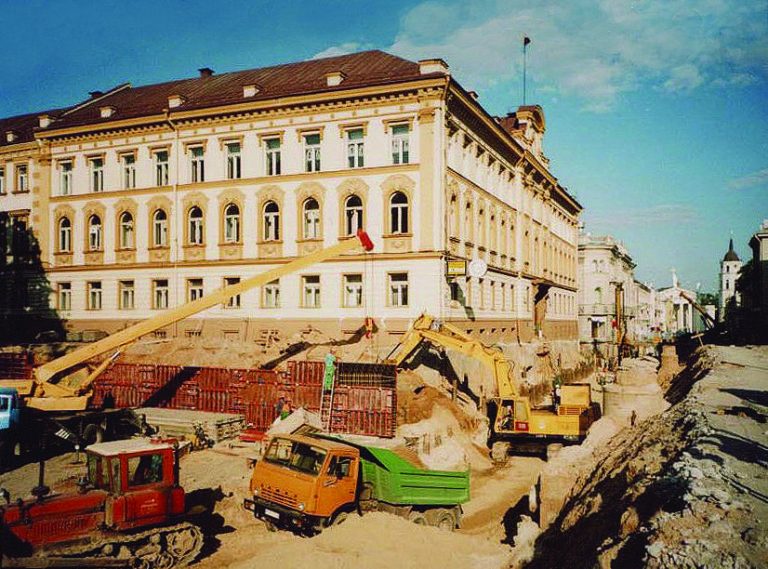
Since 1990, the Vilnius City Municipal Council has consisted of 51 members elected by residents for four-year terms and is headed by the city mayor. From 1990 to 2004, the Municipal Government was based in the building at 9 Gedimino Ave. This is a building with Neo-Baroque forms, formerly the House of Count Dimitry Mauros, built in 1881.
After 2004, the building was reconstructed, with the corridor system and inner courtyard removed. Today, it houses the “Gedimino 9” shopping centre.
6. Vilnius City Municipal Government, 3 Konstitucijos Ave.
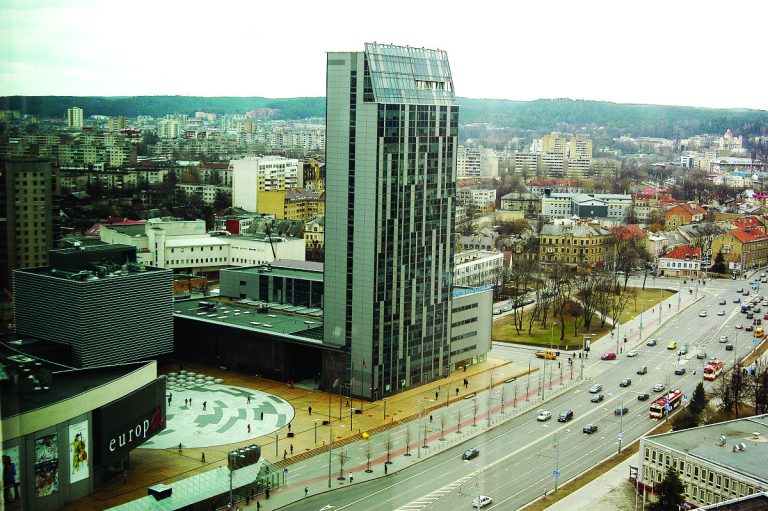
Since 2004, the Vilnius City Municipal Government has been based in the modern 20-storey building at 3 Konstitucijos Ave. The nearby Europe Square is surrounded by the “Europa” shopping centre and the 33-storey “Europa” business centre – the tallest building in the Baltic States.